
This article has been reviewed according to Science X's editorial process and policies. Editors have highlighted the following attributes while ensuring the content's credibility:
It's recommended that all adolescents get vaccinated against human papillomavirus (HPV), as the infection can cause cancer. HPV causes nearly all cases of cervical cancer and about 70% of some forms of head and neck cancers. While some regions of the United States have relatively high rates of HPV vaccination, there are major vaccine shortages in much of the world.
A new Yale study, published in Science Advances, introduces a genetic platform that could be used to boost future HPV vaccine development.
"The current vaccine is great. There's just not enough of it," says Daniel DiMaio, M.D., Ph.D., Waldemar Von Zedtwitz professor of genetics at Yale School of Medicine (YSM). "There are persistent vaccine shortages that are anticipated to continue for the foreseeable future. Therefore, there would be a real advantage to coming up with ways to make more vaccines or make them more efficiently."
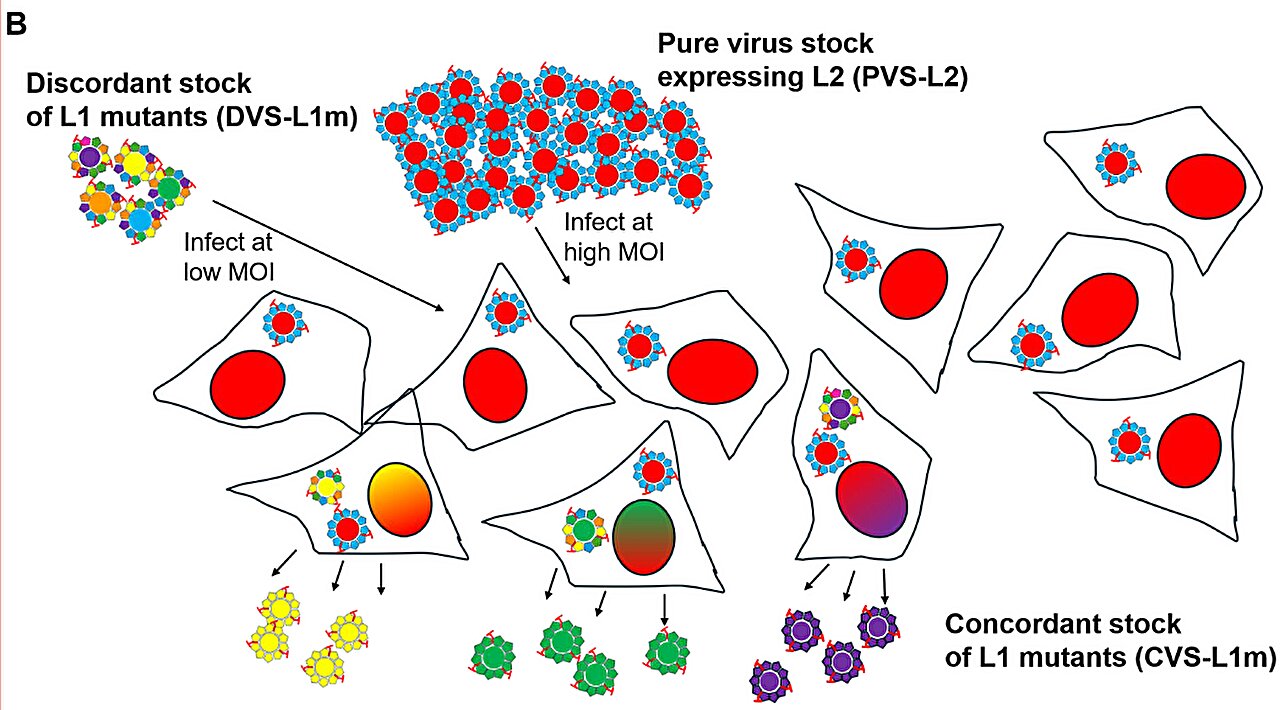
To create a better vaccine, DiMaio and his lab members homed in on a molecule—called the L1 protein—that's part of the virus-like particle used in the HPV vaccine. They reasoned that they could look for and isolate different versions of the L1 protein that might enable better vaccines. But there was a problem—there were no methods that allowed them to do that.
So, they set out to develop a technique to isolate better versions of the L1 protein. The first step was to overcome the difficulty of cultivating HPV.
Source link





