
This article has been reviewed according to Science X's editorial process and policies. Editors have highlighted the following attributes while ensuring the content's credibility:
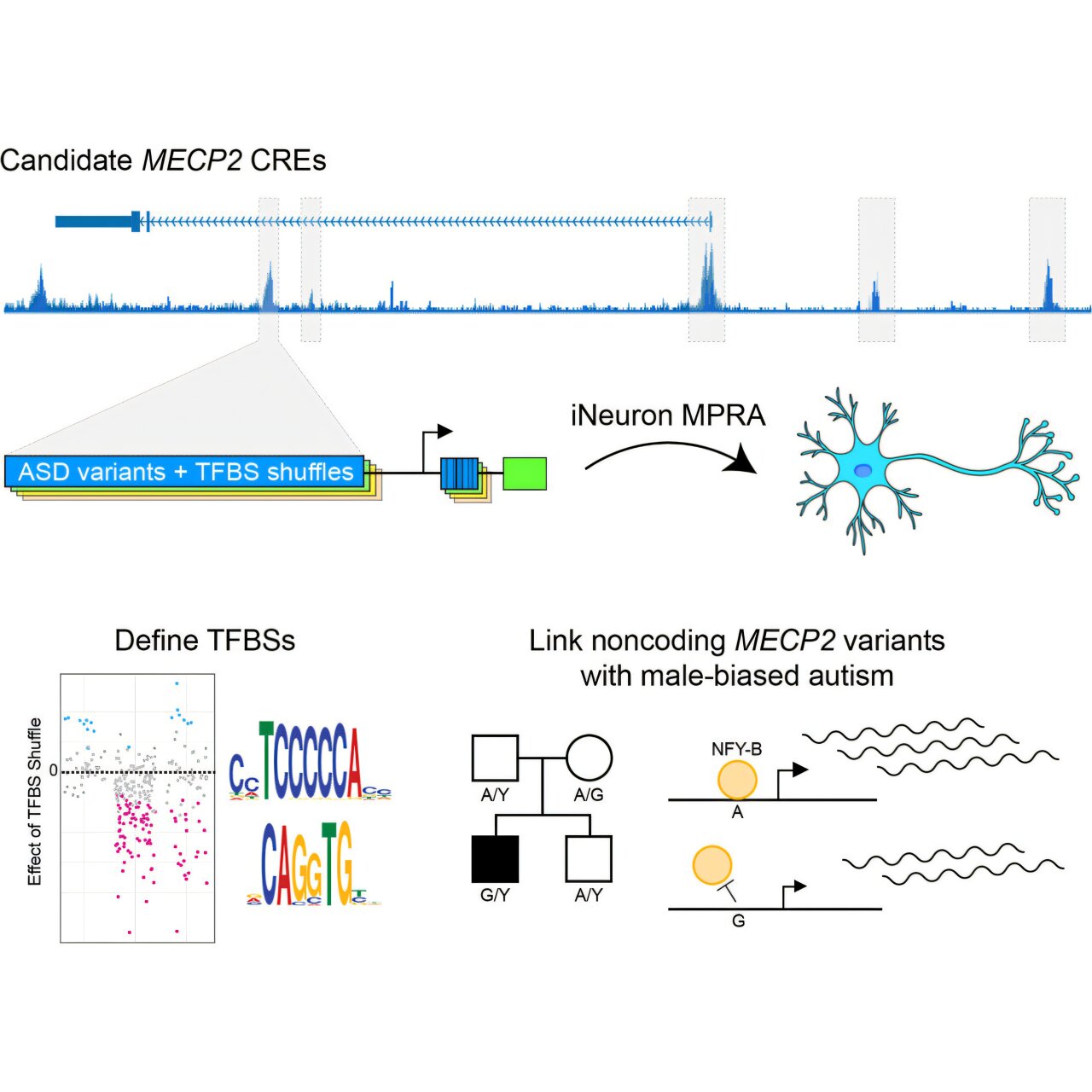
Researchers at Baylor College of Medicine, the Duncan Neurological Research Institute (Duncan NRI) at Texas Children's Hospital and collaborating institutions have identified new genetic candidates that help explain why autism is diagnosed about four times more often in boys than in girls. The study, published in the American Journal of Human Genetics, reveals that small changes in the gene MECP2 on the X chromosome might help explain part of this difference.
"Autism is a common, heritable neurodevelopmental trait that affects how a person communicates, interacts with others and experiences the world, and is characterized by altered social interactions and restricted, repetitive behaviors or interests," said corresponding author Dr. Huda Zoghbi, distinguished service professor at Baylor, director of the Duncan NRI and a Howard Hughes Medical Institute investigator.
The fact that autism is diagnosed about four times more often in males than in females suggests sex-specific factors may increase male vulnerability. In the current study, the researchers drew from their long experience with the gene MECP2, which is on the X chromosome (X and Y are the sex chromosomes) and has been associated with neurodevelopmental conditions, including autism.
"We tested the idea that the predominance of autism in males could be explained in part by mild mutations in an X chromosome gene's regulatory regions. Females might be protected from such a mild mutation because of their second X chromosome, but males, who have only one copy, would be more vulnerable," said first author Dr.
Source link





