This article has been reviewed according to Science X's editorial process and policies. Editors have highlighted the following attributes while ensuring the content's credibility:
Protein phosphatase 2A plays a central role in controlling many cell signaling pathways, which are frequently disrupted during tumor development and growth.
PP2A is made up of three proteins that must bind to each other for it to function properly and suppress tumors.
The inability of PP2A to assemble is commonly seen in lung, uterine, prostate and liver cancer.
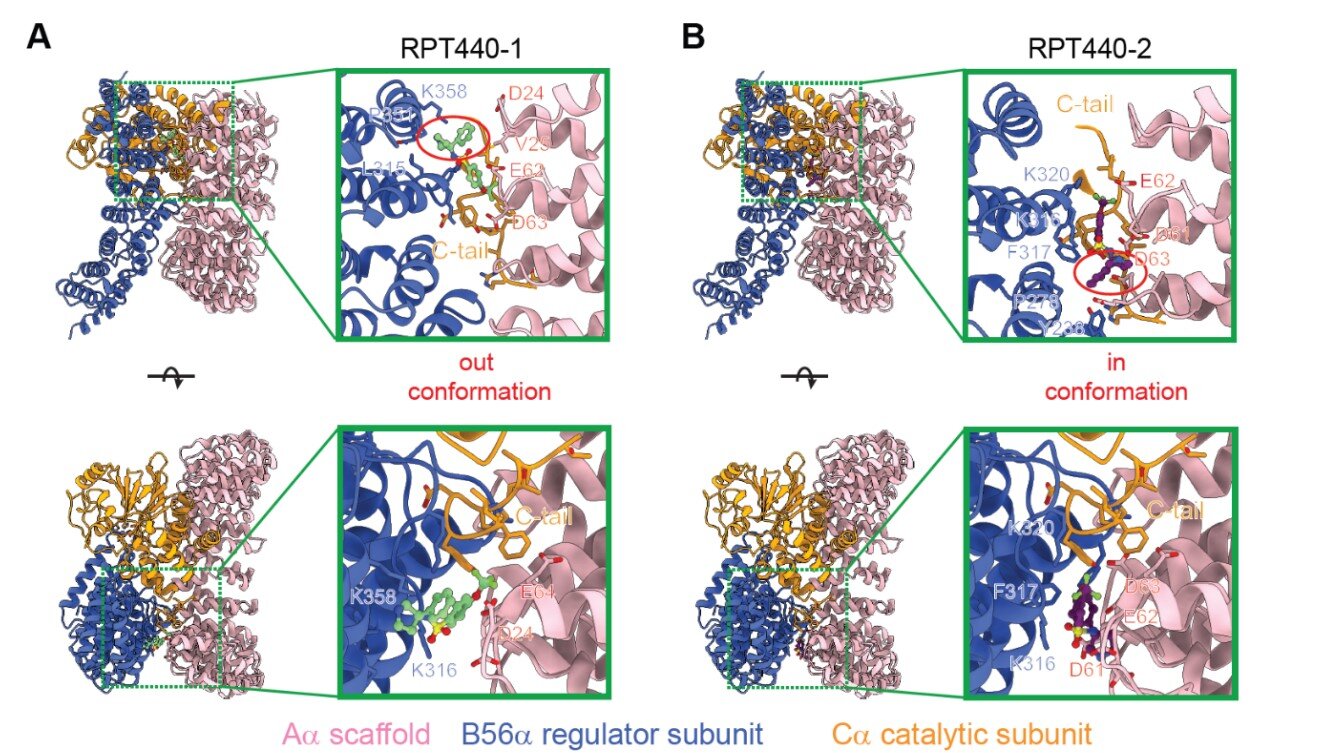
In two studies, University of Michigan researchers have found that targeting PP2A using a 'molecular glue' that helps the protein to retain its structure can help suppress the growth of cancer cells.
Lung cancer is the second most common cancer and the leading cause of cancer death in the United States.
Over 80% of lung cancers are non–small cell lung cancers, in which tumor cells are larger and grow more slowly than those in small cell lung cancer.
Many gene mutations are associated with non–small cell lung cancer, including the gene KRAS, which is important for cell growth and division and is mutated in 30% of cases.
Patients with tumors that have these mutations have shorter survival times and often become resistant to therapies.
In a study published in The Journal of Clinical Investigation, University of Michigan researchers found that targeting PP2A with the molecular glue RPT04402 can help treat non–small cell lung cancers that have KRAS mutations.
"There are several FDA-approved drugs that target KRAS in pancreatic, colon and lung cancer," said Goutham Narla, Louis Newburgh research professor of internal medicine and member of Rogel Cancer Center.
Source link