
This article has been reviewed according to Science X's editorial process and policies. Editors have highlighted the following attributes while ensuring the content's credibility:
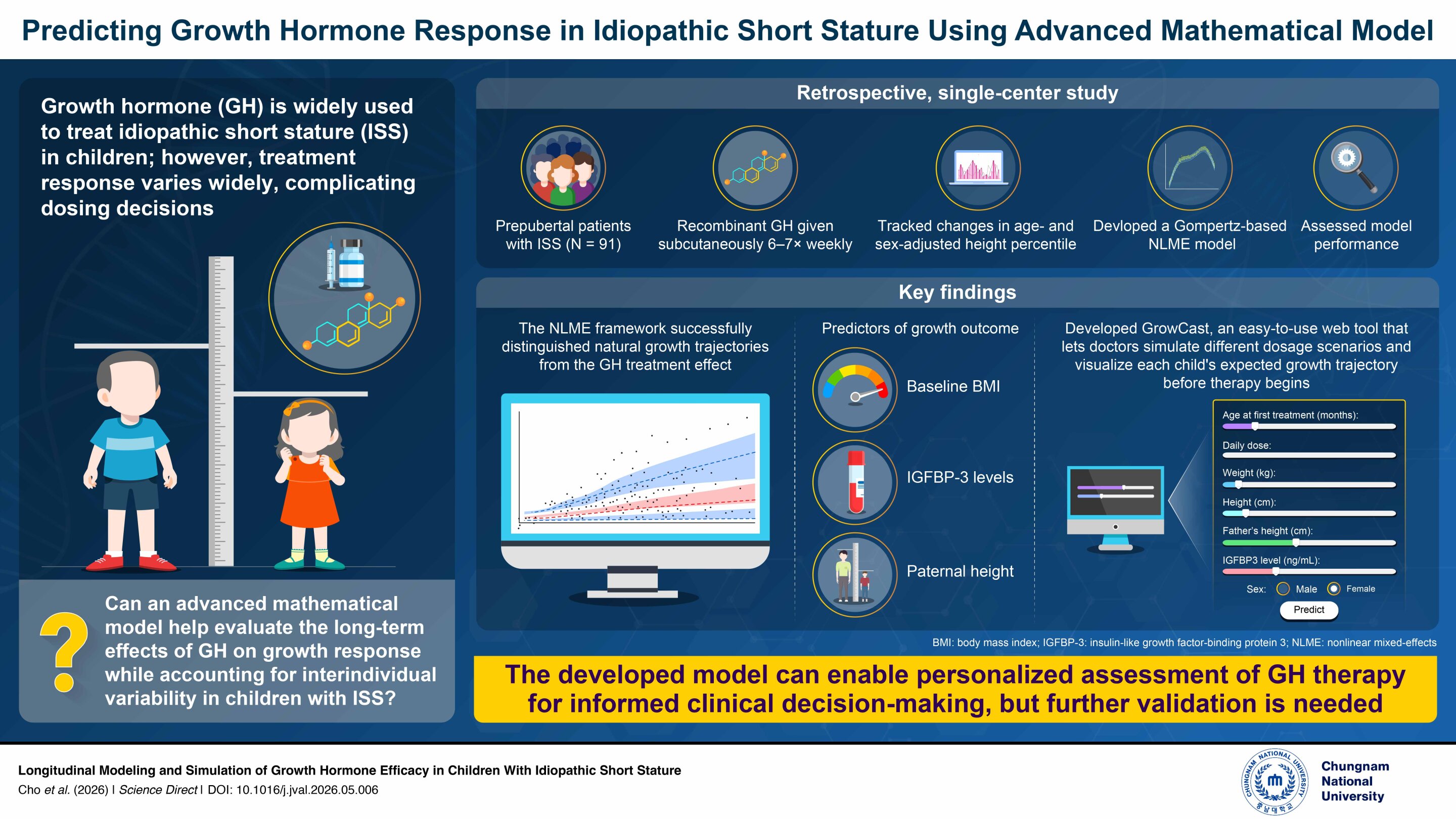
Idiopathic short stature (ISS) describes children whose height is substantially below the expected range for their age and sex without any identifiable medical cause. Recombinant growth hormone (GH) therapy is often used to support growth, but responses vary widely. While some children experience meaningful catch-up growth, others show more limited improvement, making it difficult for clinicians and families to anticipate treatment benefits and set realistic expectations.
To address this challenge, researchers led by professor Jung-woo Chae investigated changes in height percentile over time among children with ISS receiving GH treatment.
Published in Value in Health, the study used age- and sex-adjusted height percentiles rather than height gain in centimeters alone. This approach captures changes in height percentile relative to peers of the same age and sex, providing a clinically intuitive measure of catch-up growth.
The retrospective, single-center study analyzed 91 prepubertal Korean children with ISS—41 boys and 50 girls—who received recombinant human GH (somatropin) between July 2020 and December 2023. GH was administered subcutaneously six to seven times per week, with doses adjusted during routine care.
Researchers collected demographic, growth, parental height, laboratory and treatment data from medical records. Cumulative GH exposure was incorporated into a Gompertz nonlinear mixed-effects model to characterize growth trajectories and differences in individual treatment response.
16 at follow-up. 2 percentile points, although responses differed substantially among patients.
Source link





