This article has been reviewed according to Science X's editorial process and policies. Editors have highlighted the following attributes while ensuring the content's credibility:
Scientists have long known that aging drives inflammation in the heart, but exactly how those changes are distributed throughout the organ has remained unclear. Now, a team from The Jackson Laboratory (JAX) has pinpointed hotspots where these "inflammaging" signals concentrate, providing a new map of cardiac aging and a foundation for future studies of cardiovascular health and decline.
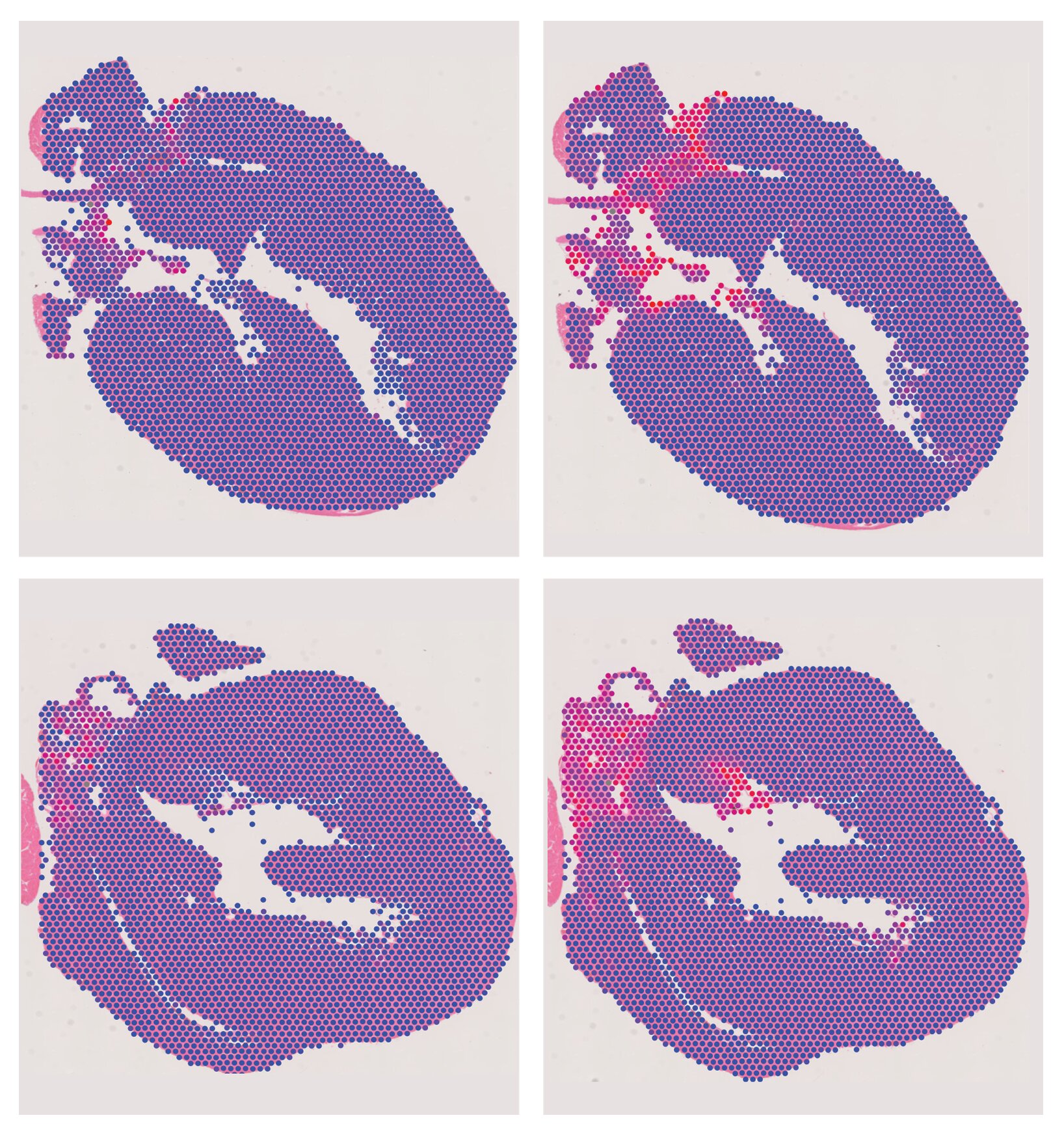
In a study of mouse hearts published in Aging Cell, JAX researchers found that cellular signatures associated with age-related inflammation and scarring concentrated in the aortic valves and aortic root, where immune and connective tissue cells interact in ways that change with age and may influence the health of the surrounding heart muscle.
"Some of the markers associated with inflammaging were there from the very beginning in young hearts, but they were focused specifically in areas no one had defined before, in the valves and the aorta rather than in muscle tissue," said study author Nadia Rosenthal, scientific director at JAX.
"We really have to think of aging as something that is not linear, because just like we know that people don't age at the same rate, what we know now is that organs and tissues don't age at the same rate either, even within one individual."
Previous studies have often focused on the heart's muscle cells, especially the left ventricle, because it's the main pumping chamber that sends blood through the aorta to the body.
Source link