This article has been reviewed according to Science X's editorial process and policies. Editors have highlighted the following attributes while ensuring the content's credibility:
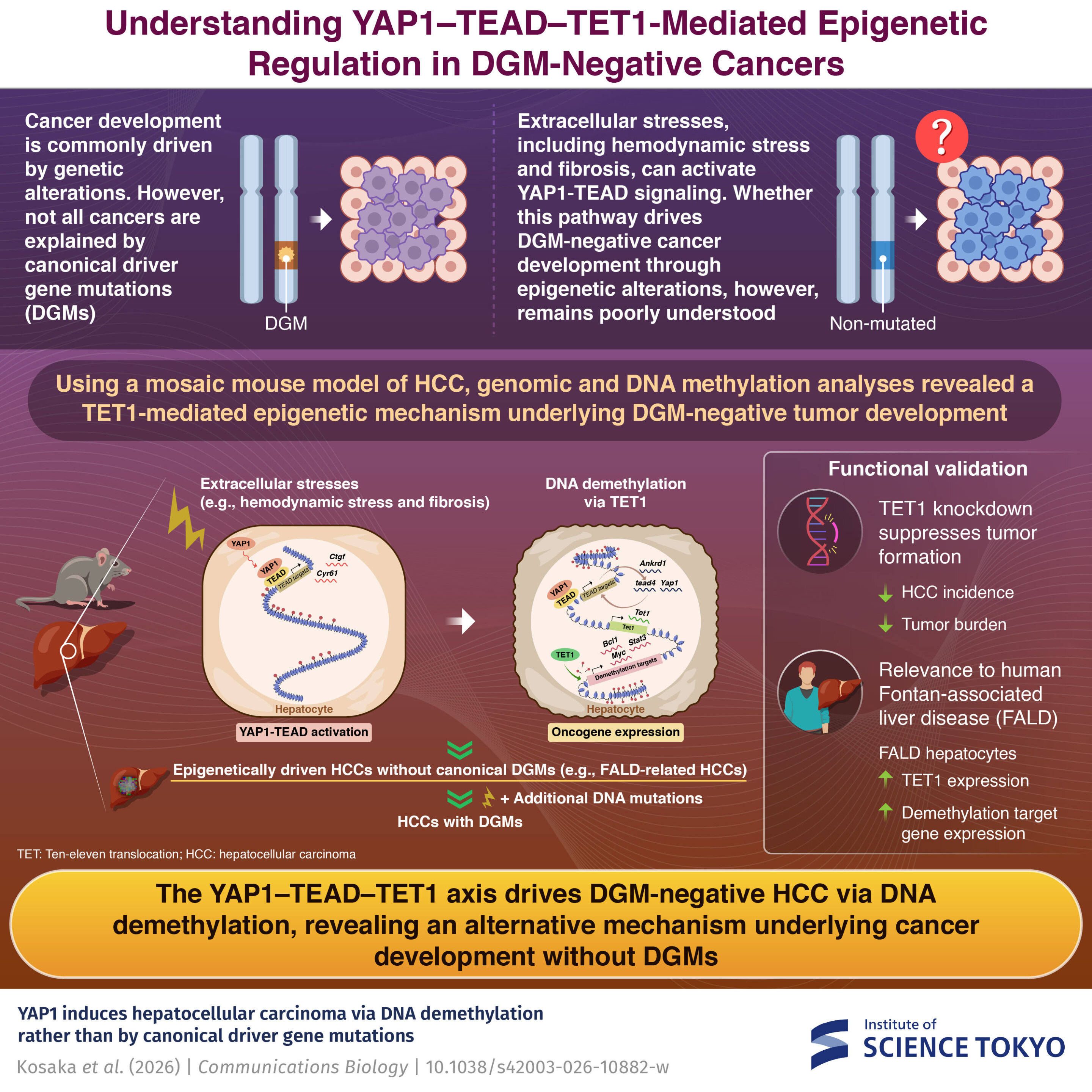
Cancers can develop through epigenetic pathways even without driver gene mutations (DGMs), according to a study from Science Tokyo. Researchers uncovered the YAP1–TEAD–TET1 axis, which triggers DNA demethylation and activates multiple oncogenes in hepatocellular carcinoma. Suppressing TET1 reduced tumor formation in mice, while analysis of human liver disease data supported the relevance of these findings. This study reveals an alternative epigenetic route to cancer development and offers new insights into DGM-negative cancers.
Most cancers develop from genetic abnormalities that activate proto-oncogenes or inactivate tumor suppressor genes. To identify the changes that drive cancer onset, scientists worldwide use next-generation sequencing, which enables comprehensive analysis of whole genomic and transcriptomic data and aims to uncover driver gene mutations (DGMs).
While DGMs have been identified in the vast majority of cancers, a subset lacks these canonical mutations. The underlying mechanisms that allow these tumors to develop, therefore, remain poorly understood. Understanding how cancer develops without DGMs could reveal alternative routes to tumor formation.
In an effort to better understand this mechanism, a research team led by professor Hiroshi Nishina, assistant professor Yoshimi Okamoto-Uchida and doctoral student Misaki Kosaka (at the time of the study), from the Medical Research Laboratory, Institute of Integrated Research, Institute of Science Tokyo (Science Tokyo), Japan, identified an oncogenic mechanism involving DNA demethylation. Their findings, published in the journal Communications Biology , examine how YAP1-TEAD signaling can promote hepatocellular carcinoma (HCC) without canonical DGMs.
Source link