
This article has been reviewed according to Science X's editorial process and policies. Editors have highlighted the following attributes while ensuring the content's credibility:
Imagine if you were sitting in a concert hall and, with the wave of a hand or press of a button, you could cue an instrument to begin playing onstage.
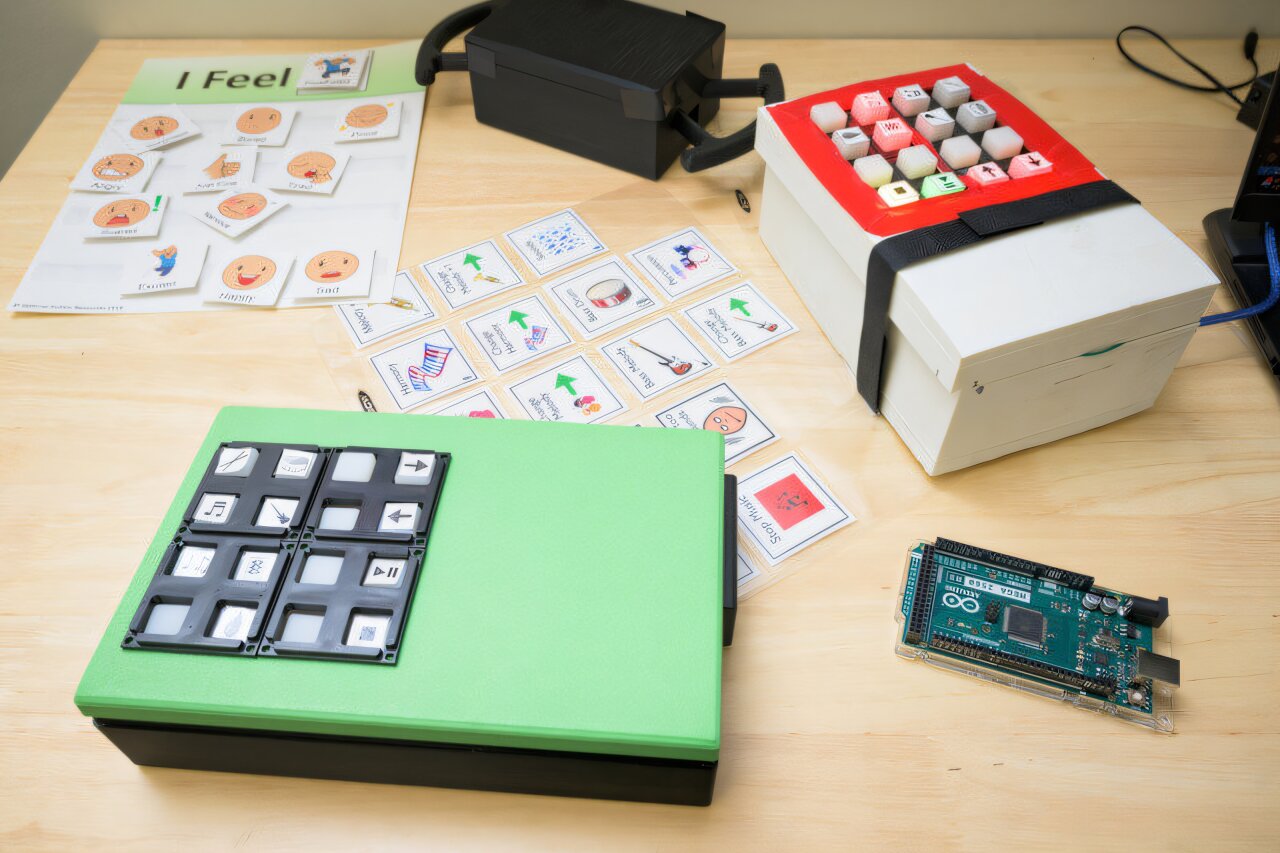
Two University of Delaware professors have created an innovative device that puts this musical power into the hands of children, allowing them to select a children's song they want to listen to and then press buttons to add or subtract layers of sound to suit their sensory needs and preferences.
Daniel Stevens, director of the School of Music and professor of music theory, and Matthew Mauriello, assistant professor of computer and information sciences, developed the listening device and modular music library—called uCue—to help children with autism spectrum disorder engage with music on their own terms.
Some individuals with autism experience sound sensitivities that affect their ability to benefit from early formative music experiences. With their work, Stevens and Mauriello aim to change that.
"We hope our device will allow them to engage with music, giving them the same access to become musicians or composers, or to simply enjoy listening to music with their family," said Mauriello.
Stevens and Mauriello, named Innovation Ambassadors, are among a growing cohort of UD problem solvers who are passionate about the ability of academic invention to benefit society.
Stevens: The project began in an honors music theory course at the University of Delaware.
Source link





