
This article has been reviewed according to Science X's editorial process and policies. Editors have highlighted the following attributes while ensuring the content's credibility:
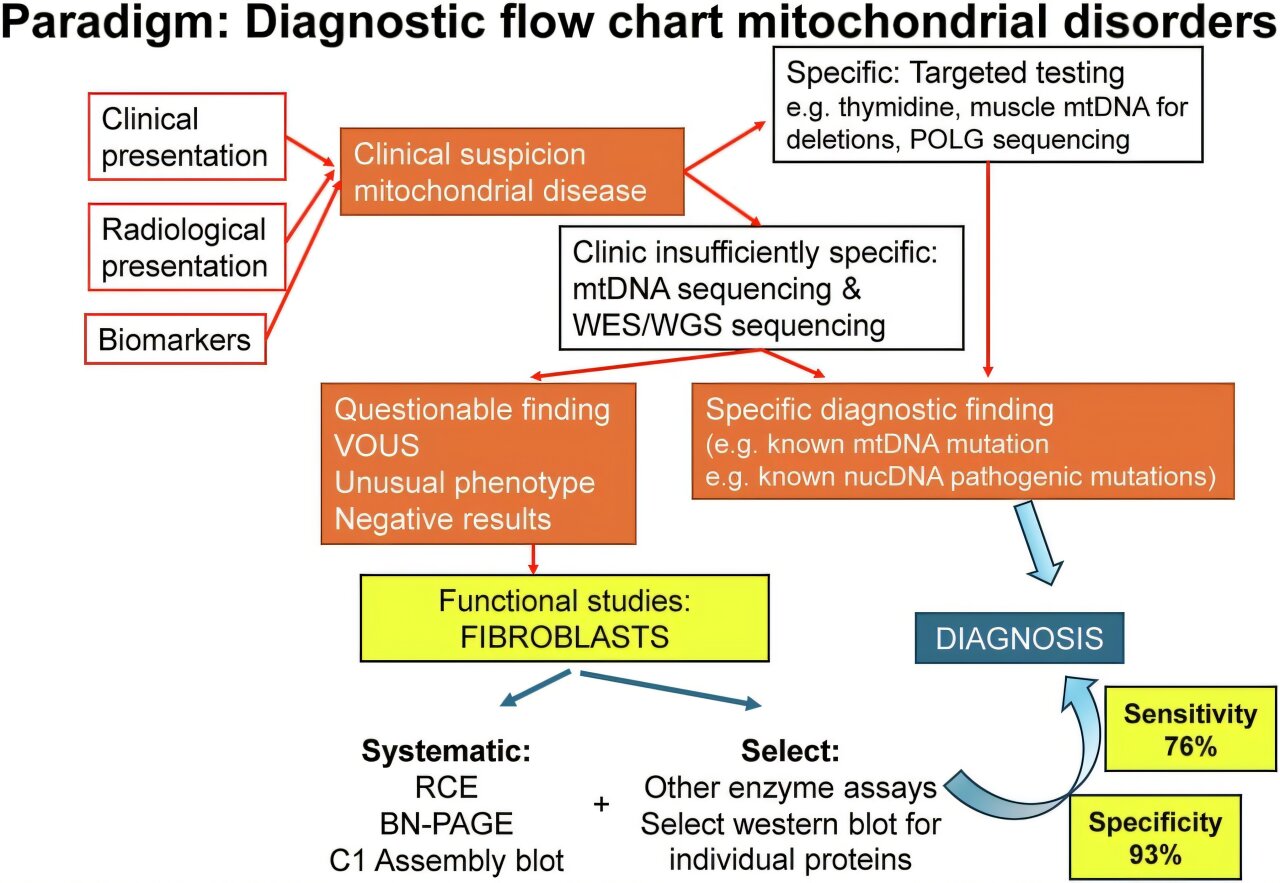
Researchers at Children's Hospital Colorado (Children's Colorado) and the University of Colorado Anschutz School of Medicine have published one of the largest studies to date evaluating advanced laboratory testing for mitochondrial disease, providing new evidence that a small skin biopsy can often help diagnose these rare and complex conditions without the need for more invasive procedures.
The study, published in EMBO Molecular Medicine, evaluated the clinical utility of a comprehensive set of functional diagnostic tests used to identify primary mitochondrial diseases, a group of genetic disorders that impair the body's ability to produce energy. Mitochondrial diseases affect approximately 1 in 5,000 people and can affect multiple organs throughout the body.
The research was jointly led by Johan Van Hove, M.D., Ph.D., a clinical biochemical genetics and metabolism specialist at Children's Colorado, and Marisa W. Friederich, Ph.D., scientific director at Children's Hospital Colorado Mitochondrial Laboratory, who together work on improving diagnosis of mitochondrial disorders.
"Diagnosing mitochondrial disease can be incredibly challenging for patients, families and clinicians," said Van Hove, who is also a professor at the University of Colorado Anschutz School of Medicine. "While advances in genetic testing have transformed our ability to identify many of these conditions, a significant number of patients still do not receive clear answers. This study shows that functional testing can play a critical role in closing that gap."
Genetic testing, including whole-genome sequencing , is often the first step in evaluating patients with suspected mitochondrial disease.
Source link





