
This article has been reviewed according to Science X's editorial process and policies. Editors have highlighted the following attributes while ensuring the content's credibility:
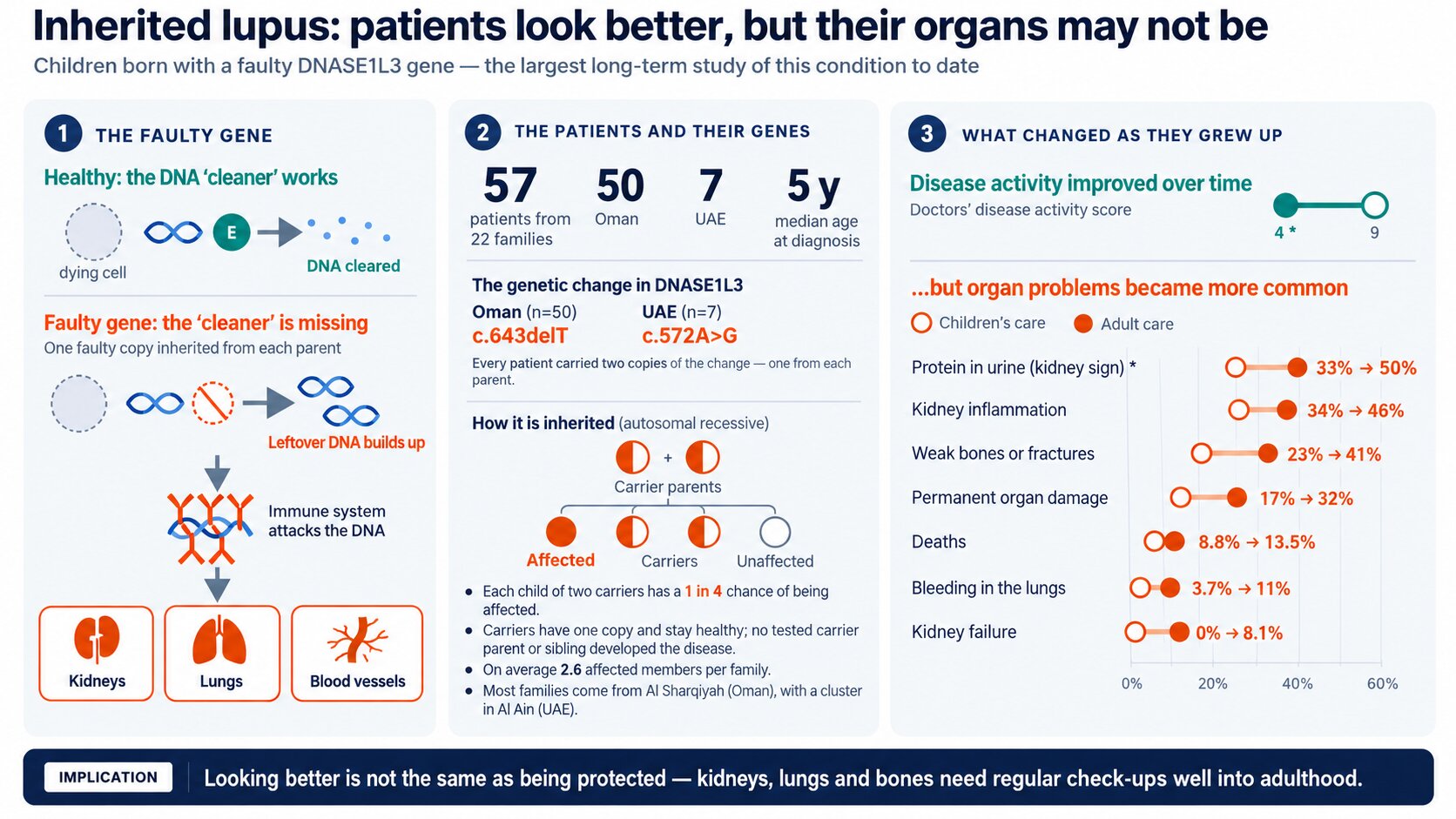
A multicenter study led by researchers at Sultan Qaboos University has found that patients with a rare inherited form of lupus may continue to accumulate organ damage even when conventional measures indicate that their disease activity has declined. According to the research team, this represents the largest longitudinal cohort of DNASE1L3 deficiency reported to date.
The study, "Discordance between disease activity and long-term outcomes in DNASE1L3 deficiency: a multicenter longitudinal cohort study," was published in Lupus Science & Medicine. It examined DNASE1L3 deficiency, a rare genetic disorder that can cause systemic lupus erythematosus and hypocomplementemic urticarial vasculitis syndrome at an early age.
The DNASE1L3 gene produces an enzyme that helps clear DNA released from dying cells. When this enzyme is deficient, genetic material may remain in the circulation and contribute to the formation of immune complexes that trigger chronic inflammation and damage the body's tissues.
Researchers followed 57 genetically confirmed patients from 22 families receiving care at pediatric rheumatology centers in Oman and the United Arab Emirates. The cohort showed striking geographic clustering, with 79% of patients originating from Al Sharqiyah Governorate in Oman and a second cluster identified in Al Ain, UAE.
Most Omani patients shared the same homozygous DNASE1L3 variant, while the UAE cluster carried a different recurrent variant, highlighting the strong familial and regional pattern of this rare inherited condition.
The group included 32 males and 25 females, with a median age at diagnosis of just five years, which is an unusually early age for systemic lupus erythematosus.
Source link





