This article has been reviewed according to Science X's editorial process and policies. Editors have highlighted the following attributes while ensuring the content's credibility:
Patients with glioblastoma, an aggressive type of brain tumor, usually undergo surgery to remove the tumor. However, it's difficult for surgeons to remove all of the cancer cells, and the tumor often recurs.
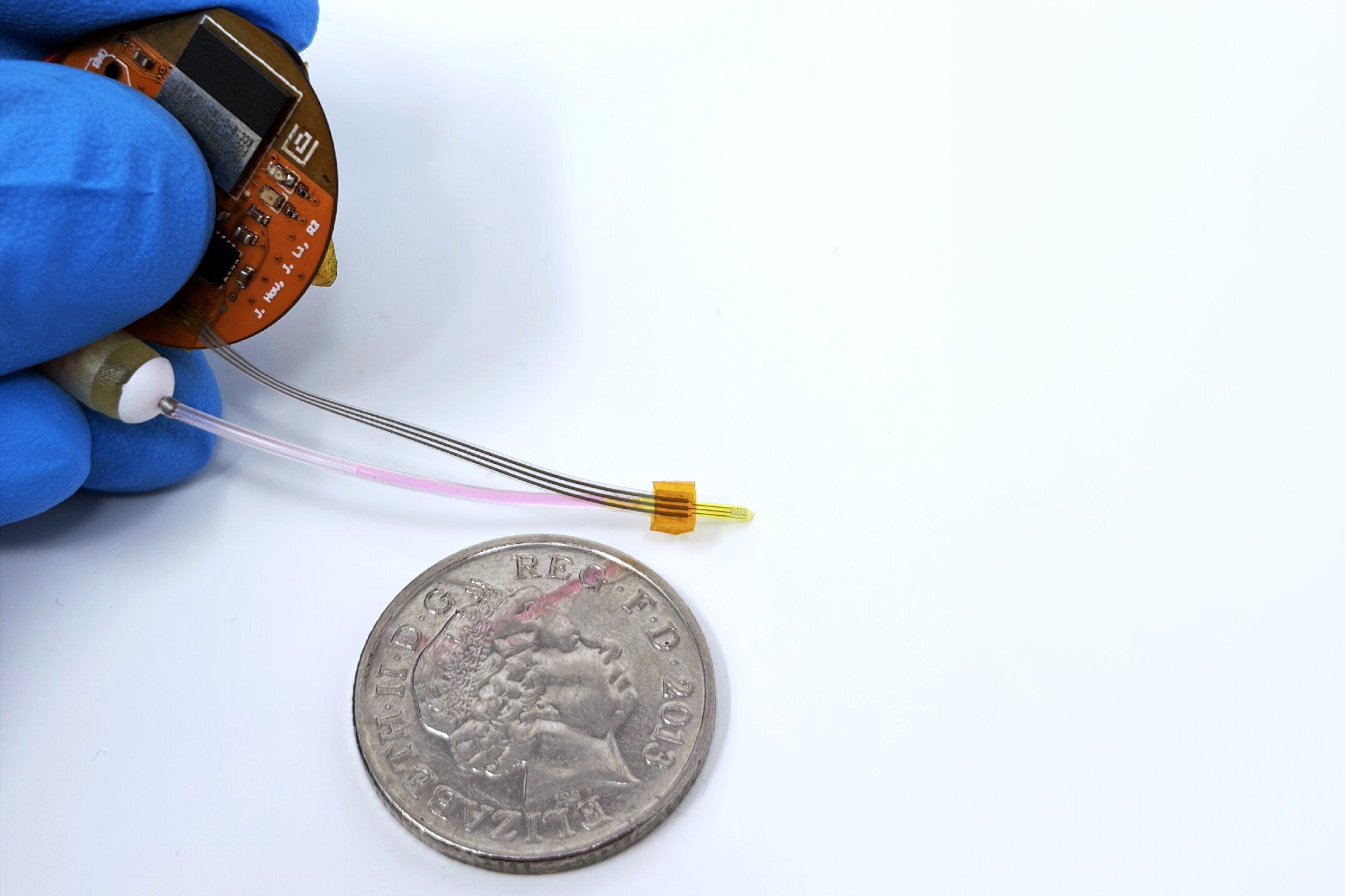
MIT researchers have designed an implantable drug-delivery device that they hope could help prevent recurrence of glioblastoma. Their device contains a reservoir that can release drugs over an extended period, along with ultrasound transducers that use sound waves to help drugs spread farther through the brain and bypass the blood-brain barrier.
Such a device could be implanted in the brain during surgery, then gradually release drugs that would help kill the remaining tumor cells. After implantation, a wireless controller can be used to program the exact ultrasound dosages to be delivered, enhancing the reach of the delivered therapy.
"We have 24 transducers in one ultrasound array, which can help a given drug bypass the blood-brain barrier and enhance the drug infusion. The device also gives doctors options in terms of the size, the length and the number of infusions," says Canan Dagdeviren, an associate professor of media arts and sciences at MIT and the senior author of the study.
In a paper appearing in the journal Device, the researchers showed that their ultrasound device allowed molecules to spread farther after being released, in tissue models and in a mouse study.
Source link