
This article has been reviewed according to Science X's editorial process and policies. Editors have highlighted the following attributes while ensuring the content's credibility:
While birthday candles measure the number of years someone has lived, they don't always tell the full story about someone's health. Two people born on the same day can have immune systems that age differently, leaving some older adults with resilient defense systems and others with dysfunctional immune systems that increase their risk for age-related diseases.
A study led by researchers at Washington University School of Medicine in St. Louis, Nationwide Children's Hospital in Ohio and King's College London in the United Kingdom has created a map of human immune aging that helps decode these different trajectories.
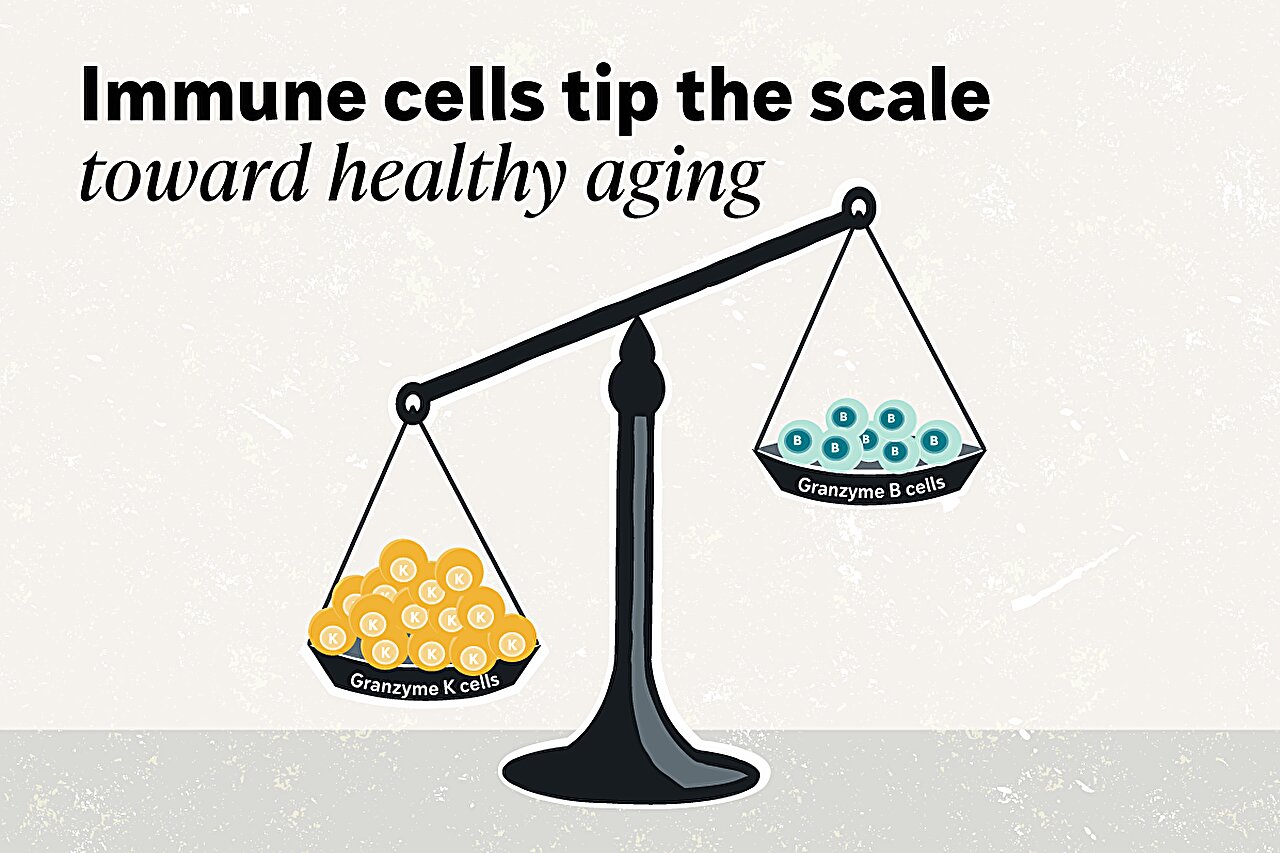
The findings, published in Immunity, show that a ratio between two immune cell types can reveal whether someone stays healthy or may face a risk of future disease.
"We have found that there are clues in the blood that can tell us whether someone is on a healthy or unhealthy aging trajectory," said co-corresponding author Maxim N. Artyomov, the Alumni Endowed Professor of Pathology and Immunology at WashU Medicine.
"Identifying specific biological red flags in the immune system could pave the way for early-warning tests that spot disease risks years before a clinical diagnosis."
The researchers, including co-corresponding authors Stephen Harridge, a professor of human and applied physiology at King's College London, and Mykyta Artomov, an assistant professor at the Institute for Genomic Medicine at Nationwide Children's Hospital, set out to understand how people's immune systems age.
Source link





