This article has been reviewed according to Science X's editorial process and policies. Editors have highlighted the following attributes while ensuring the content's credibility:
When remembering an experience, people often recall not just where it happened, but also its timing and how it unfolded over time. This helps them to recall sequences of events and associations that can guide their actions in new scenarios.
Memories of events, their timing and the order they occurred in are known to be encoded by the hippocampus. This is a structure located deep inside the brain that plays a key role in memory, the regulation of emotions and spatial navigation.
Past research showed that some neurons in the hippocampus, called place cells, become active when people are in specific locations. These neurons can also respond to other features of an event or experience.
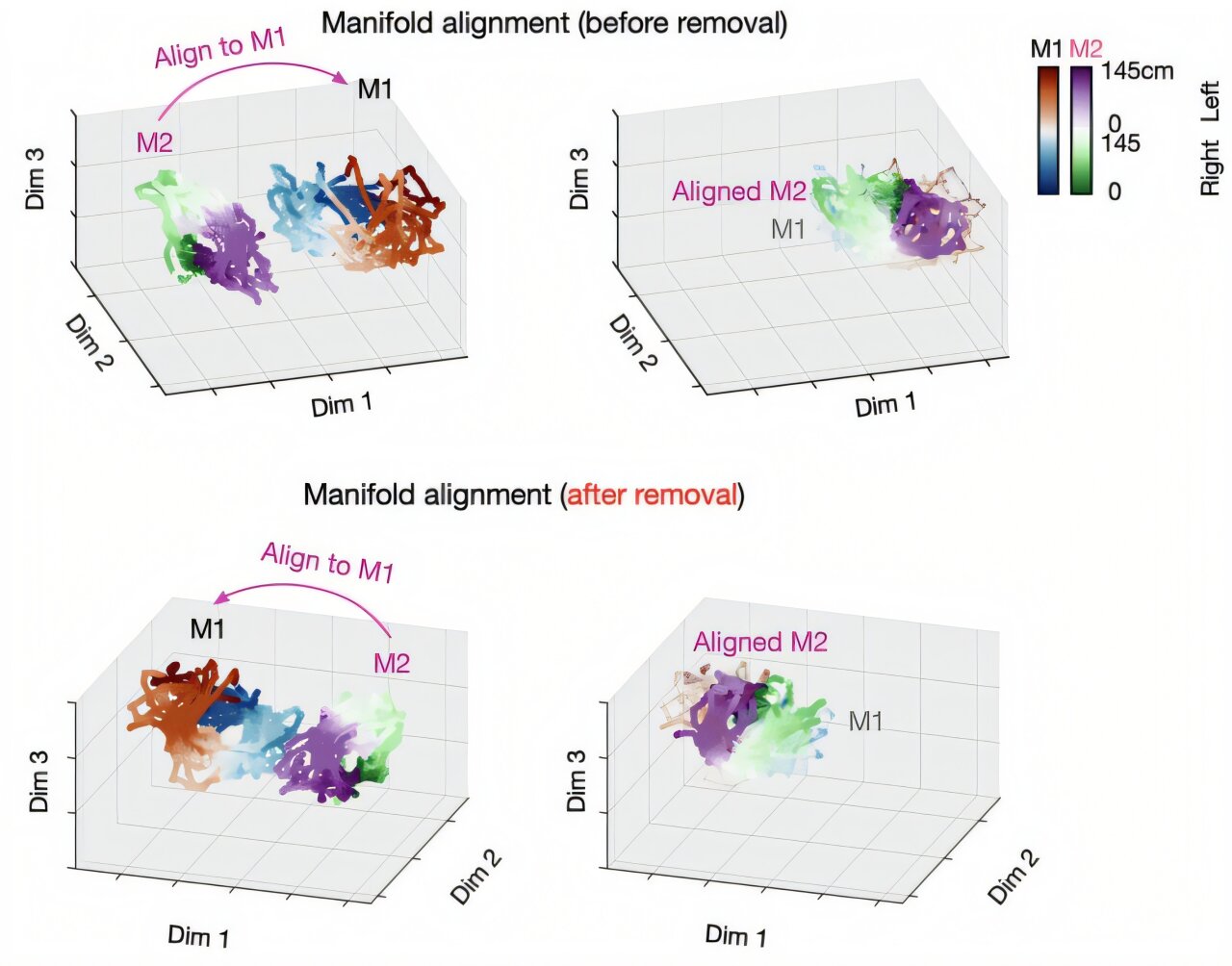
Researchers at Cornell University recently studied the activity of neurons in the hippocampus of mice as they were completing various tasks. Their observations, presented in a paper published in Nature Neuroscience, suggest that different aspects of experience are represented by distinguishable patterns in the collective activity of hippocampal neurons.
To understand how neurons in the hippocampus encode experiences, the researchers carried out experiments with mice. The mice were trained to complete memory tasks in different mazes, including a task that required them to remember the route they previously took (left or right) and select the path heading the opposite direction during the following experimental trial.
While the mice were navigating mazes, the team recorded the activity of neurons in their hippocampus using tiny probes that were implanted in their brains.
Source link