This article has been reviewed according to Science X's editorial process and policies. Editors have highlighted the following attributes while ensuring the content's credibility:
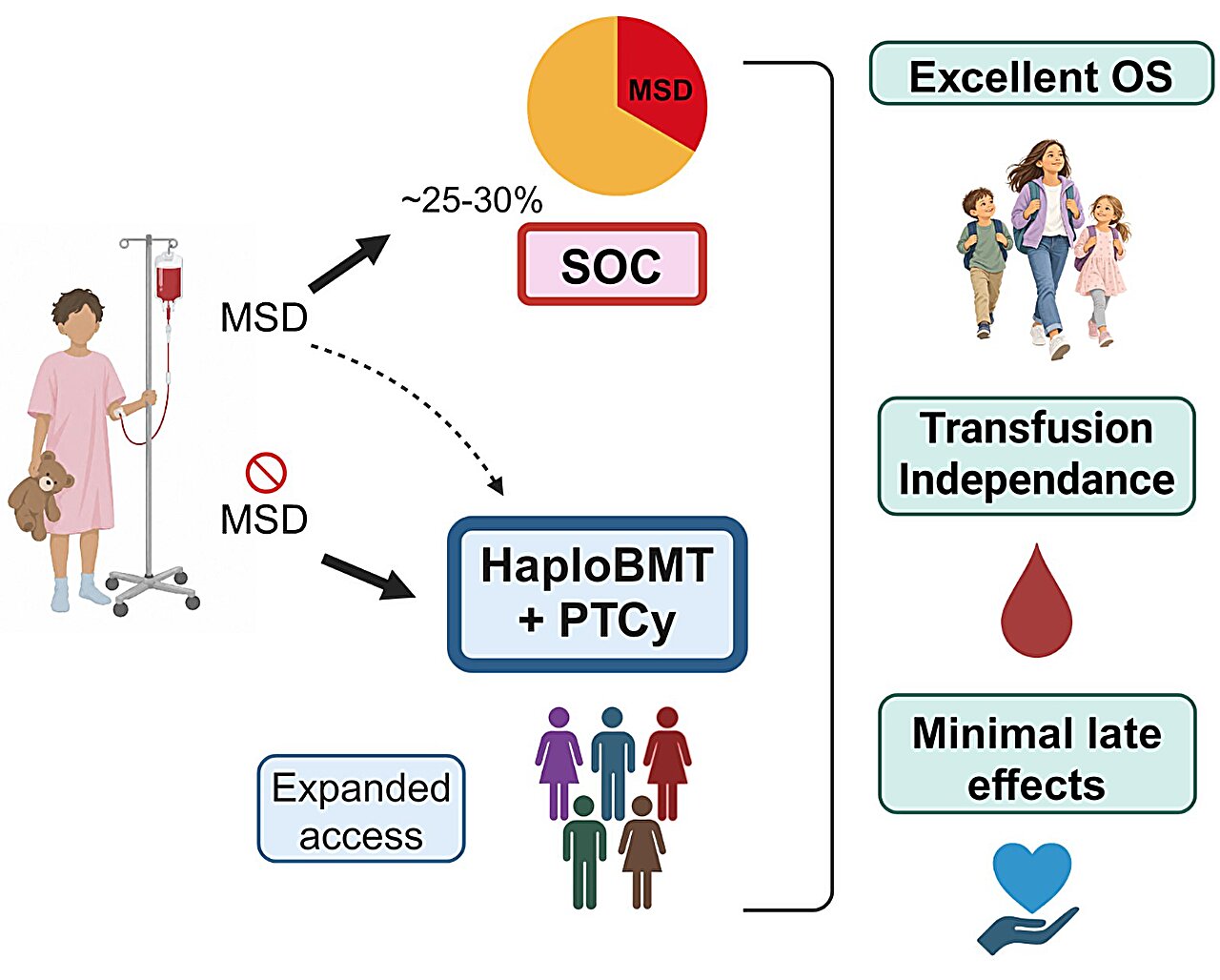
Researchers at the Johns Hopkins Sidney Kimmel Comprehensive Cancer Center and Johns Hopkins Children's Center report that bone marrow transplant using half-matched family donors achieved a 96% survival rate among child, adolescent and young adult patients with severe aplastic anemia, a rare, life-threatening disorder in which the bone marrow fails to produce enough healthy blood cells. The approach expands access to potentially curative treatment for patients who do not have a fully matched donor.
The findings from the study were published Aug. 3 in Blood Advances. They suggest that the treatment may be an effective first option for young patients with severe aplastic anemia, including those who have not received previous treatment and those whose disease has returned or failed to completely respond to up-front therapies.
Severe aplastic anemia occurs when the bone marrow fails to produce sufficient red blood cells that carry oxygen, white blood cells that fight infection, and platelets that help blood clot. Bone marrow transplantation can cure the disease by replacing damaged blood-forming cells with healthy donor cells. The researchers say only about 25% to 30% of patients have a fully matched sibling donor, and finding an unrelated matched donor can be especially difficult for patients from racial and ethnic minority populations who are underrepresented in donor registries.
The Kimmel Comprehensive Cancer Center–developed approach uses haploidentical (half-matched) donors, such as parents, siblings or other relatives, greatly expanding the pool of potential donors.
Source link