This article has been reviewed according to Science X's editorial process and policies. Editors have highlighted the following attributes while ensuring the content's credibility:
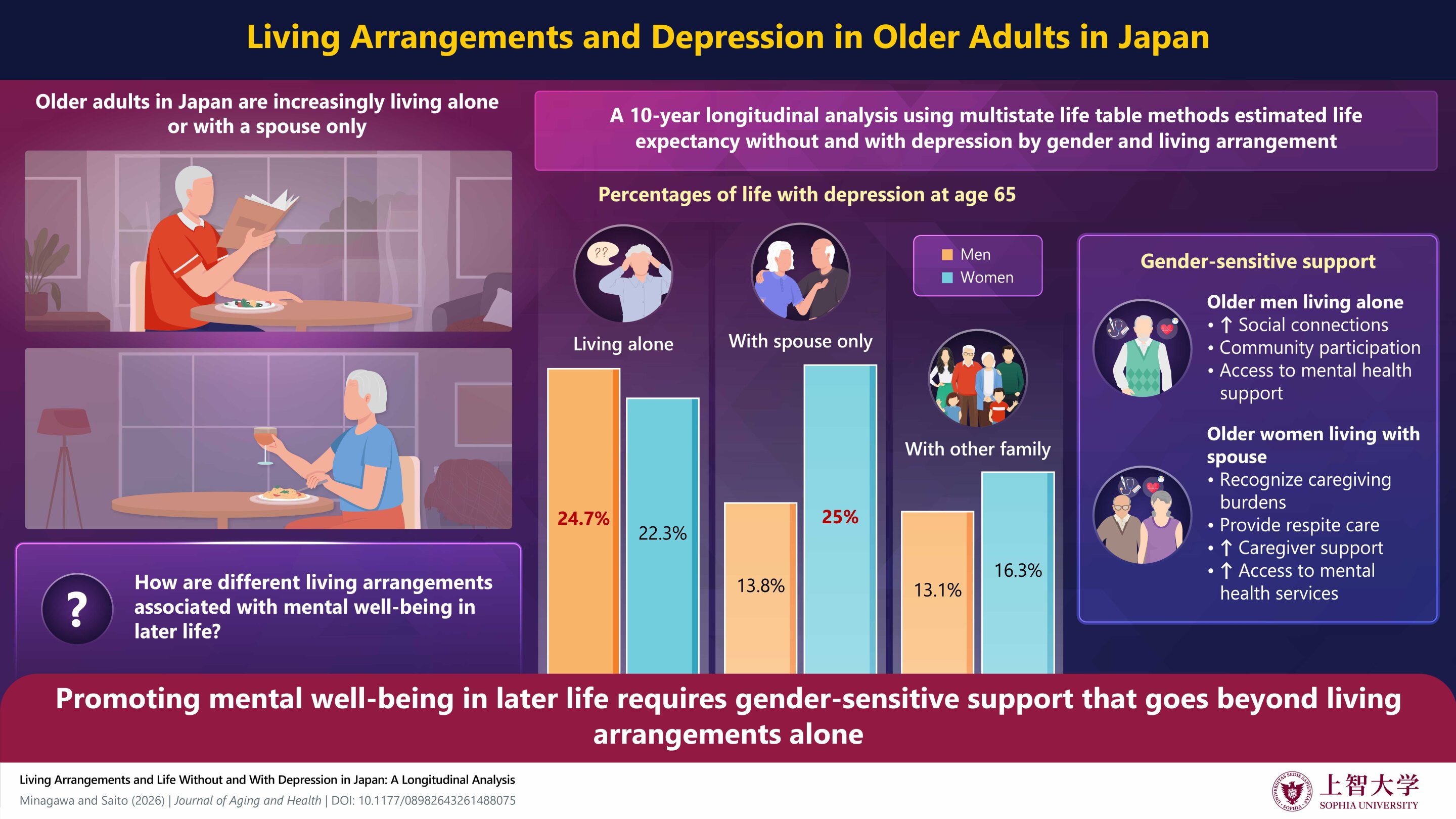
As traditional multigenerational households have become less common, increasing numbers of older adults are living alone or with only their spouses. Over the last few decades, Japan has been experiencing two major demographic changes: a rapidly aging population and a shift in how older adults live. These changes have important implications for health and well-being in later life, as living arrangements can shape social support, companionship and caregiving responsibilities.
Living alone is often associated with social isolation and depression. However, the mental health implications of other living arrangements remain to be explored. Living with family members may offer companionship and support, but it may also come with the burden of caregiving responsibilities. At the same time, these experiences may differ between men and women. How are living arrangements associated with the number of remaining years older adults can expect to live with and without depression?
To address this question, associate professor Yuka Minagawa of the Faculty of Liberal Arts at Sophia University, Japan, and professor Yasuhiko Saito of the College of Economics at Nihon University, Japan, examined the relationship between older adults' living arrangements and depression in a study published in the Journal of Aging and Health on Sept. 9, 2026.
" While previous research has focused on health risks associated with living alone, less is known about how other household arrangements shape older people's mental well-being.
Source link