This article has been reviewed according to Science X's editorial process and policies. Editors have highlighted the following attributes while ensuring the content's credibility:
Pneumonia is a common and sometimes serious infection that affects 20,000–30,000 people in Sweden every year. Well-known risk factors include advanced age, smoking and underlying medical conditions. In a new study published in eBioMedicine, researchers at Lund University and Skåne University Hospital have shown that genetic differences in the innate immune system can also influence the risk of developing the disease.
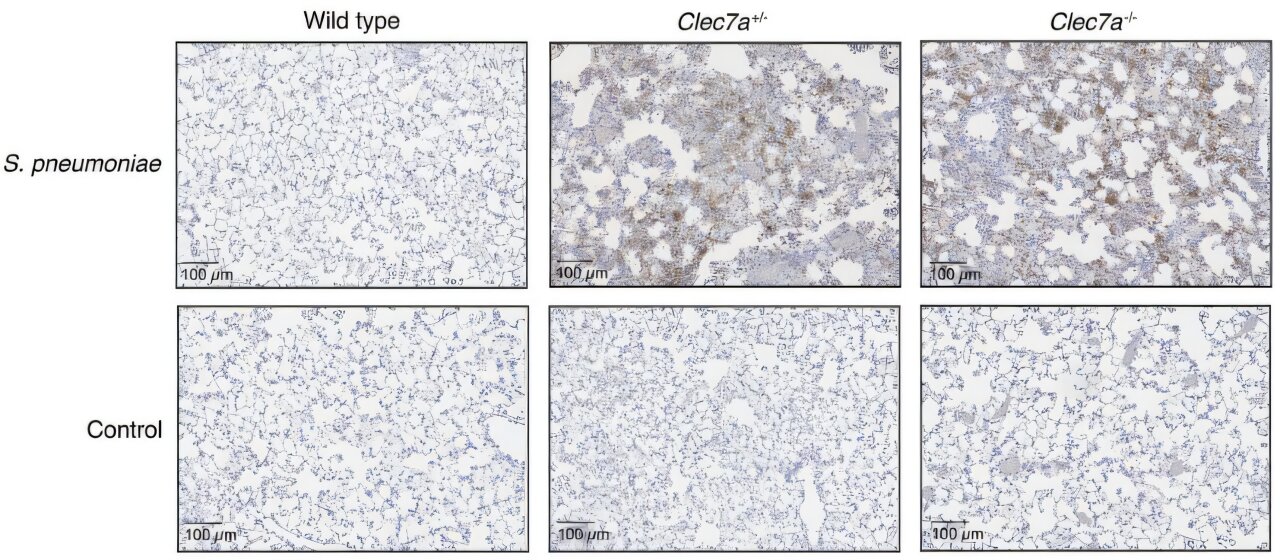
"We investigated how a common genetic variant—carried by roughly 1 in 7 Europeans—affects the immune receptor Dectin-1. The receptor is found on cells in lung tissue, where it recognizes foreign substances and helps the body to respond to them," says Kristian Riesbeck, professor of clinical bacteriology at Lund University and senior consultant in clinical microbiology at Skåne University Hospital.
Dectin-1 has previously been associated mainly with protection against fungal infections, but the study shows that the receptor also plays a significant role in defending the airways against bacteria. The analysis covered just over 28,000 participants in the Malmö Diet and Cancer Study. The participants were followed for an average of more than 17 years, during which time about 5,500 cases of pneumonia were recorded.
"The genetic variant causes the receptor to function less effectively. Carriers had an approximately 12% higher risk of developing pneumonia, even when we took into account smoking, body weight and medical conditions that affect the immune system," continues Riesbeck.
Source link