This article has been reviewed according to Science X's editorial process and policies. Editors have highlighted the following attributes while ensuring the content's credibility:
Many solid tumors, including many cancers of the pancreas, breast, colon and lung, protect themselves with a dense wall of scar-like tissue. That wall keeps the immune system's cancer-killing T cells out. It is a major reason why immunotherapy drugs, which have transformed treatment for some patients, help only a minority of people with solid tumors.
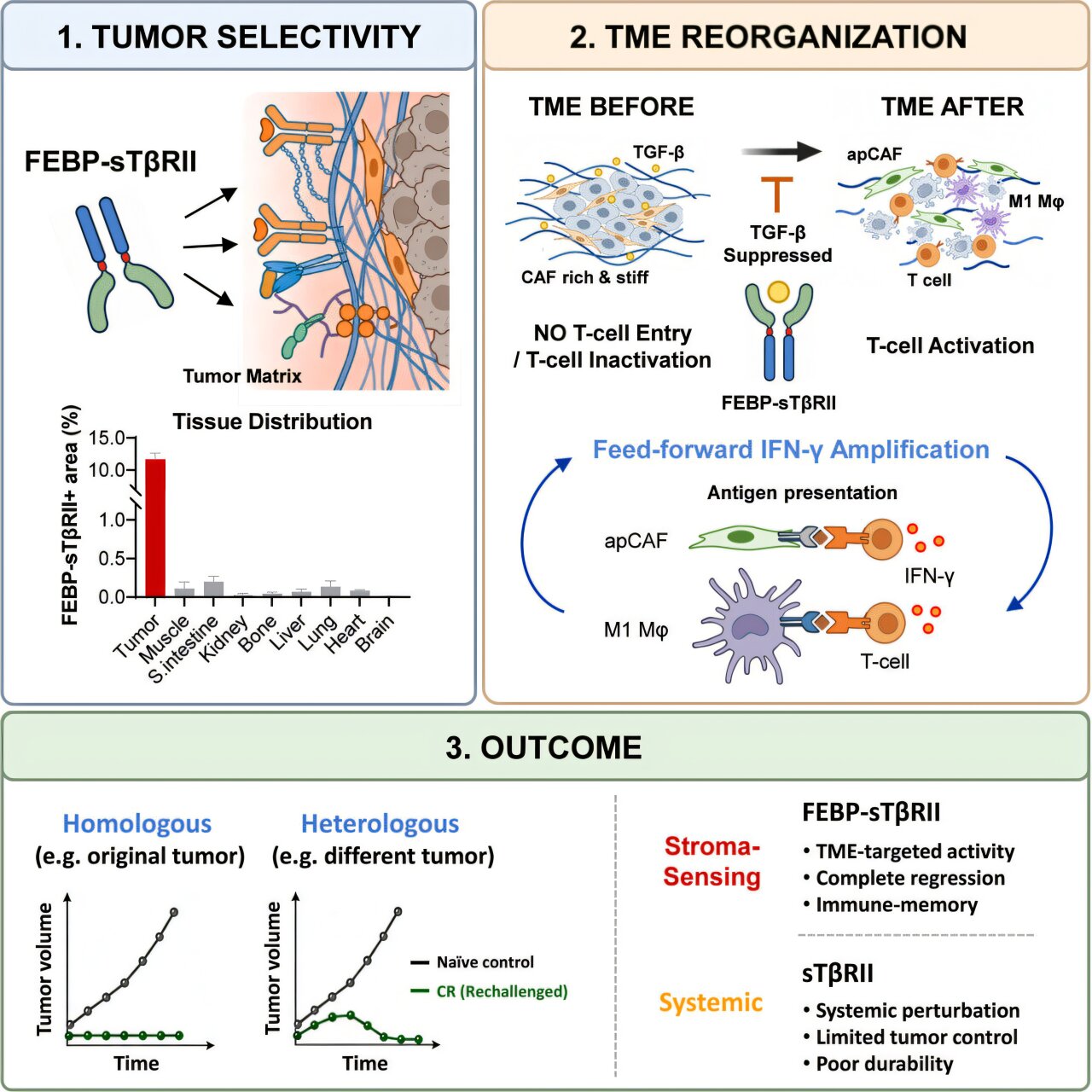
A study published in Cancer Cell describes an experimental drug that breaks down this barrier from inside the tumor and lets T cells in to attack. In mice, the drug cleared aggressive pancreatic tumors, stopped breast cancer from spreading and left the animals with long-lasting immune memory. That memory protected against new tumors, including some different types of cancer.
The international study was led by Dr. Seong-Jin Kim and his team of scientists at MedPacto Inc. in Seoul, Korea. Co-author John J. Letterio, M.D., Ph.D., is director of the Angie Fowler Adolescent and Young Adult Cancer Institute at University Hospitals Rainbow Babies & Children's Hospital and director of the Developmental Therapeutics Program at Case Comprehensive Cancer Center, Case Western Reserve University.
Tumors flood their surroundings with a signaling molecule called TGF-β. In solid tumors of many kinds, it directs nearby support cells to build fibrous tissue, and it suppresses the immune cells that could attack the cancer.
Drugs that block TGF-β throughout the body have disappointed in clinical trials.
Source link