This article has been reviewed according to Science X's editorial process and policies. Editors have highlighted the following attributes while ensuring the content's credibility:
With its torrential rains, tropical forests and omnipresent humidity, Equatorial Guinea provides the perfect conditions for mosquitoes to breed. For centuries, mosquito-borne diseases, in particular malaria, have dictated the fate of residents of this central African nation, impacting how they lived, worked and died.
But Bioko Island, off mainland Equatorial Guinea, has managed to sharply reduce malaria infections and deaths.
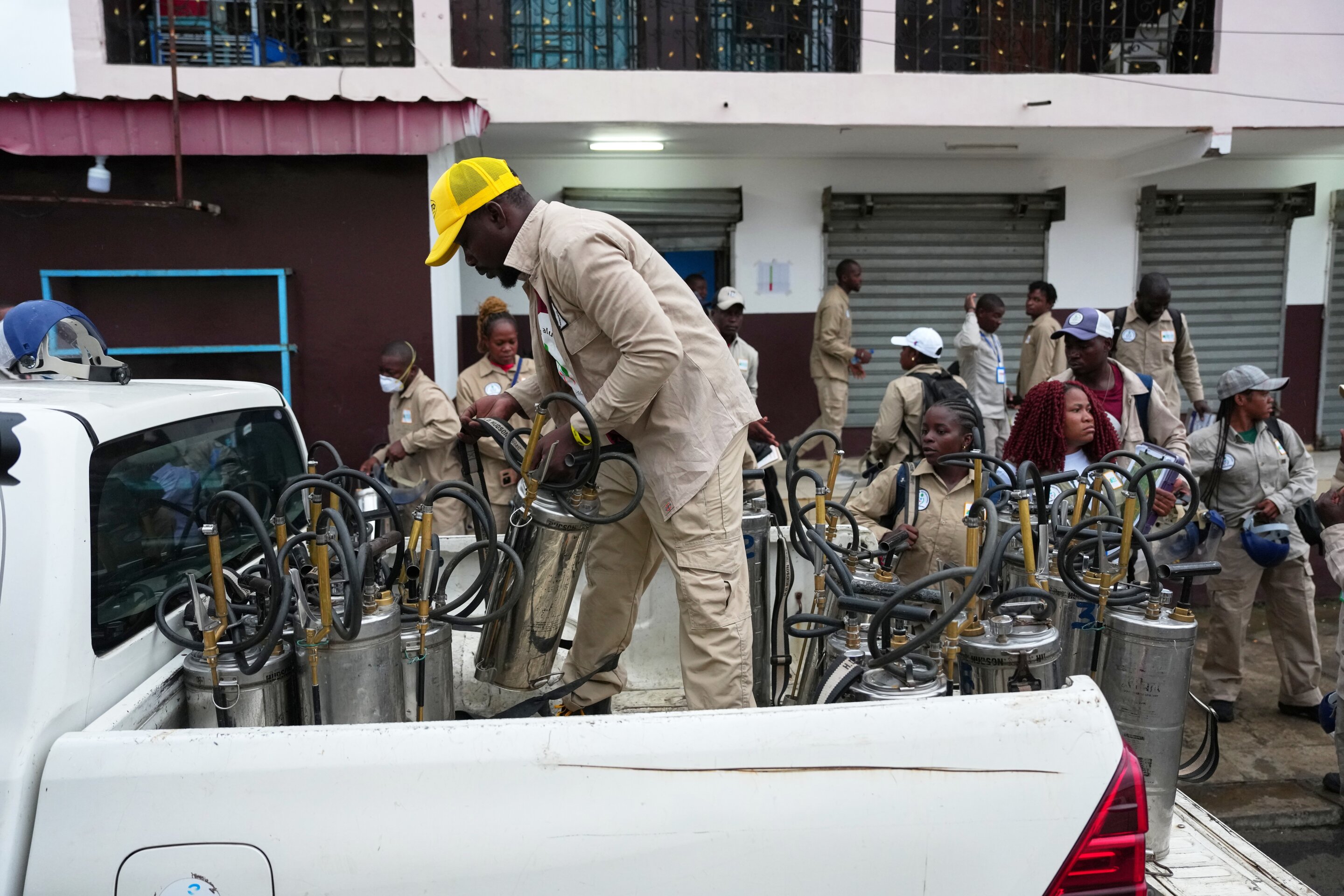
Bioko, roughly half the size of Rhode Island, has used familiar tools: indoor spraying, mosquito nets and keeping control of the larval population. Its success, however, has depended on something less easily replicated: two decades of painstaking data collection, sustained funding and workers going door to door to win residents' trust.
Now the tiny, oil-rich country wants to bring that approach to its mainland and eliminate malaria altogether. But the expansion of Bioko's strategy presents formidable challenges, from porous international borders to the sheer scale of the territory.
In Malabo, Bioko's biggest city, a team of men and women equipped with insecticide sprayers squeezed between low-rise cement buildings on a recent morning, as heavy rain drummed on aluminum roofs.
"We are here to give key messages so that the population understands the importance of our interventions," said Cristina Ngui Otogo, the program coordinator. "Today it will be hard to convince people to get out of their homes."
Around 610,000 people died in 2024 from malaria, according to the latest available data from the WHO, and African countries accounted for 95% of global cases and deaths.
Source link