
This article has been reviewed according to Science X's editorial process and policies. Editors have highlighted the following attributes while ensuring the content's credibility:
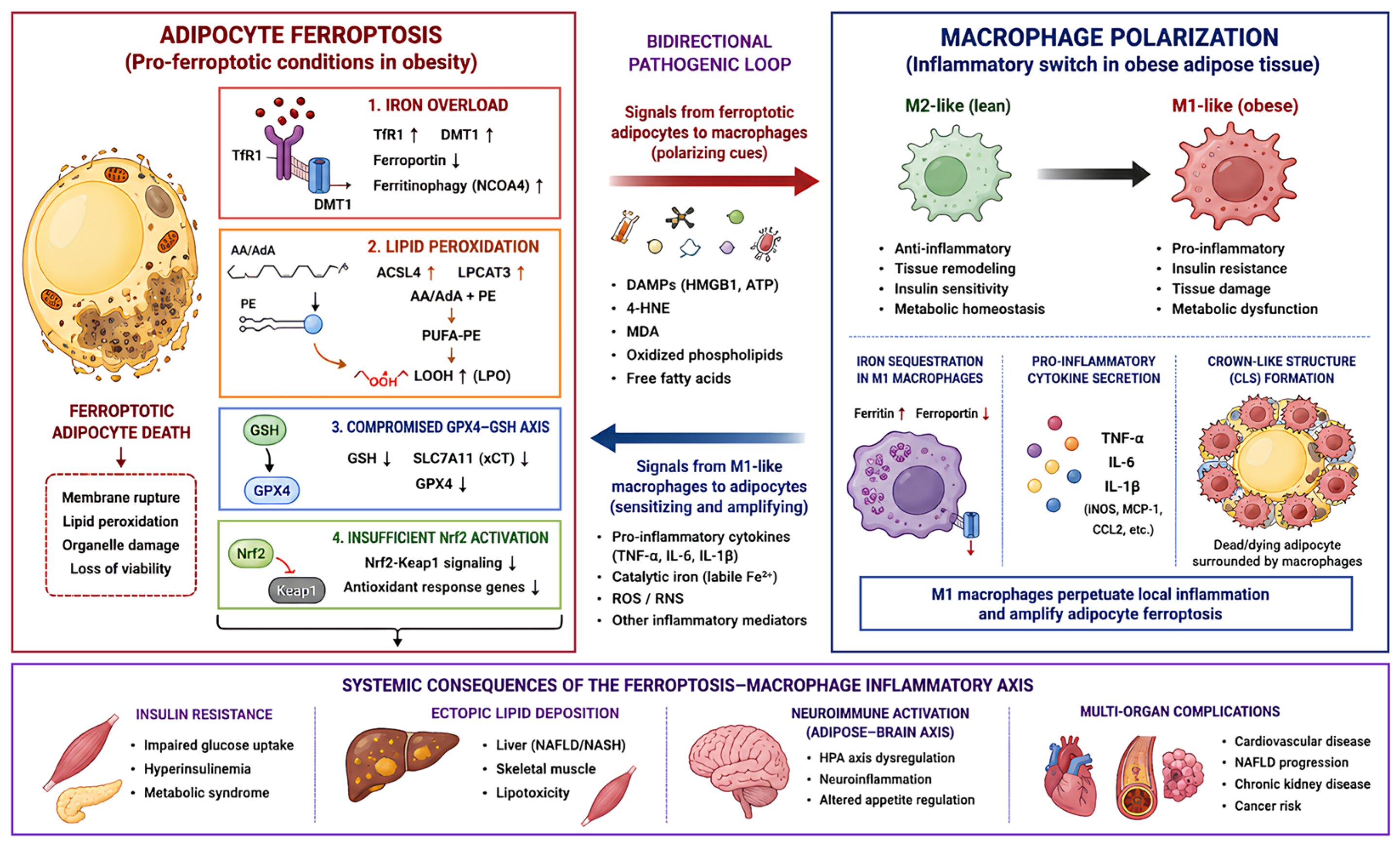
A new review examines adipocyte ferroptosis, the breakdown of fat cells due to oxidation from intracellular iron, as an emerging molecular mechanism potentially contributing to adipose tissue dysfunction, chronic inflammation and metabolic complications associated with obesity.
The study, titled "Adipocyte Ferroptosis in Obesity: Molecular Mechanisms and Nutraceutical Perspectives" and published in the International Journal of Molecular Sciences, brings together investigators affiliated with the Local Health Authority of Foggia (ASL Foggia), Temple University, the University Magna Graecia of Catanzaro, the University of Siena and the Sbarro Health Research Organization (SHRO) at Temple University, reflecting a multidisciplinary scientific collaboration across clinical, academic and biomedical research institutions.
The article synthesizes current evidence on the role of iron-dependent lipid peroxidation in adipocyte injury and death, with particular attention to the GPX4–glutathione antioxidant system and the Nrf2–Keap1 pathway. Obesity is characterized not only by excessive adipose tissue accumulation but also by profound alterations in adipose tissue homeostasis, including cellular stress, inflammation, metabolic dysfunction and adipocyte death.
Within this context, ferroptosis—a regulated form of cell death driven by iron-dependent lipid peroxidation—has emerged as a potential mechanism linking metabolic stress to adipose tissue inflammation. The review highlights evidence indicating that obese adipose tissue may present conditions favorable to ferroptosis, including altered iron homeostasis, accumulation of polyunsaturated fatty acid–rich phospholipids that are particularly susceptible to peroxidation, and impairment of antioxidant defenses.
Source link





