
This article has been reviewed according to Science X's editorial process and policies. Editors have highlighted the following attributes while ensuring the content's credibility:
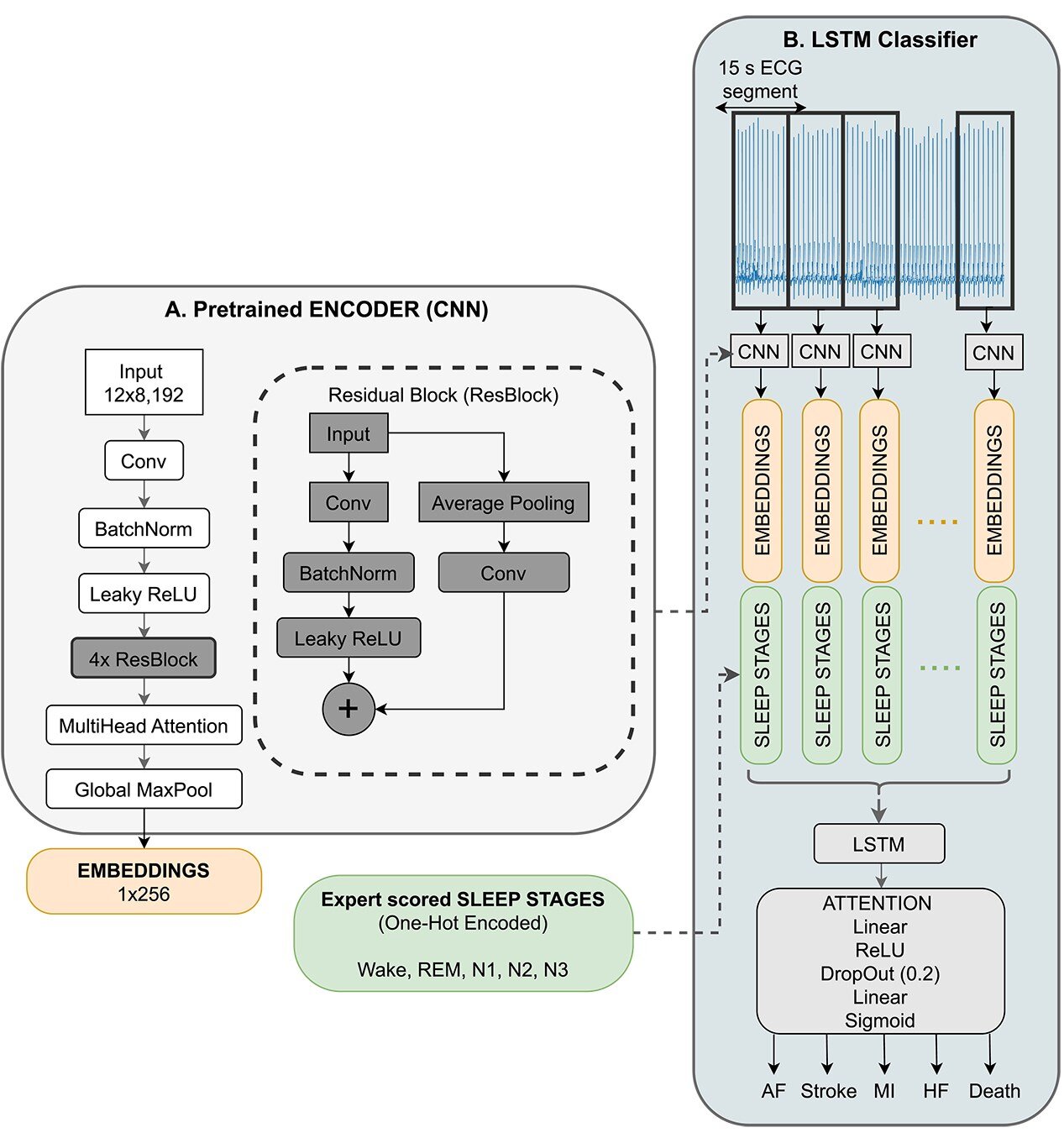
A research team supported by the National Institutes of Health (NIH) has found that electrocardiograms (ECGs) administered during sleep and paired with sleep stage information can be used to determine the risk of future adverse cardiac events. The study, which used a deep learning approach, suggests that using ECGs to predict which patients have a greater risk of poor heart-related outcomes could help guide clinical decision-making. The findings were published in the journal SLEEP.
"This new approach has the potential to identify individuals at risk for cardiovascular disease years before clinical symptoms arise," said David Goff, M.D., Ph.D., acting director of NIH's National Heart, Lung, and Blood Institute (NHLBI). "Evaluating whether this information improves traditional risk prediction is an important next step. In the future, proven analytical approaches like this could be integrated into existing diagnostic tests for patients undergoing sleep studies as a screening tool for multiple adverse cardiovascular outcomes."
Testing conducted overnight during sleep, known as polysomnography, is the standard method of diagnosing sleep disorders such as insomnia and obstructive sleep apnea, which are recognized as cardiovascular risk factors. ECGs are recorded during these tests but are not often analyzed. The research team in this study wanted to see if these recordings could be used to predict the 10-year risk of cardiovascular outcomes such as atrial fibrillation, stroke, myocardial infarction and heart failure, as well as all-cause mortality.
Source link





