This article has been reviewed according to Science X's editorial process and policies. Editors have highlighted the following attributes while ensuring the content's credibility:
Alcohol, opioids, nicotine, cocaine and other addictive substances are known to influence the brain's reward system, the network of brain regions involved in the reinforcement of pleasure-seeking behaviors. Many of these drugs trigger large surges in dopamine, a chemical messenger released in the brain that supports communication between cells, motivation-driven behaviors and learning.
Repeated consumption of addictive drugs can result in compulsive behavior, with users struggling to control their intake even when it adversely affects their lives. Repeated drug use can also weaken responses to natural rewards, such as food, social interactions and bonding.
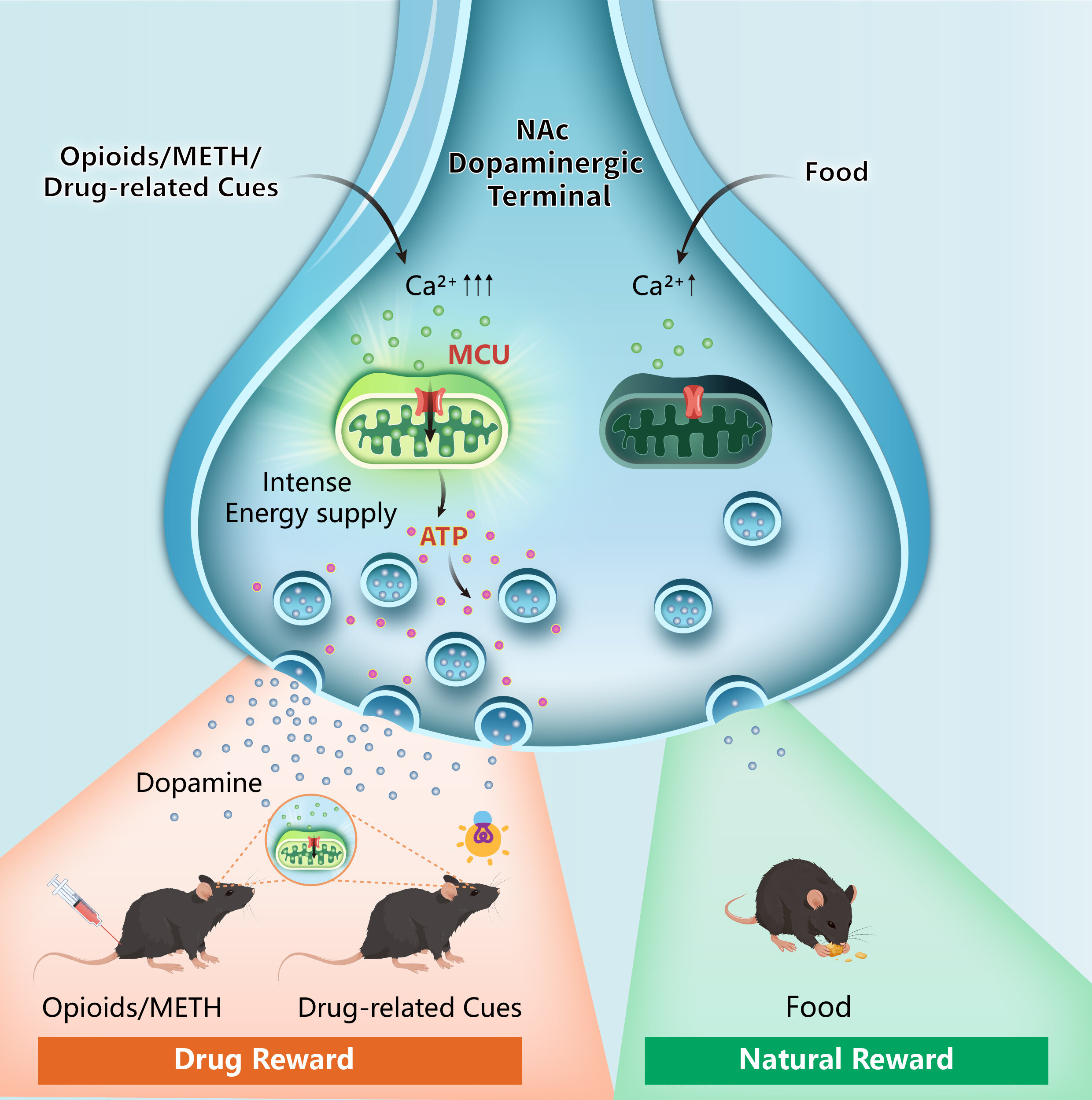
Researchers at China's State Key Laboratory of Biomedical Analysis (SKLBA) conducted a study in mice to better understand the biological processes that support dopamine release in response to two types of addictive drugs. Their paper, published in Nature Neuroscience, identifies a cellular mechanism that could help distinguish the brain's response to natural rewards from its response to opioids and methamphetamine.
Opioids, such as heroin, morphine and fentanyl, are a class of highly addictive drugs that act on opioid receptors in the central nervous system and can relieve pain. Methamphetamine, also known as crystal meth, is a powerful and addictive stimulant that increases nervous system activity.
"Our team has long been focused on mitochondria, particularly on the role of mitochondrial calcium influx in cellular emergency energy metabolism," Xin Pan, senior author of the paper, told Medical Xpress.
Source link