
This article has been reviewed according to Science X's editorial process and policies. Editors have highlighted the following attributes while ensuring the content's credibility:
Ischemic stroke can leave lasting neurological damage after the initial vascular event, with oxidative stress, neuroinflammation, neuronal death and disruption of neural connectivity contributing to impaired recovery. Although current interventions provide partial protection, their ability to prevent delayed neuronal injury remains limited, highlighting a major barrier to functional recovery.
The human dental pulp stem cell (hDPSC) secretome contains extracellular vesicles, growth factors, antioxidant enzymes and immunomodulatory proteins and may offer a cell-free therapeutic approach. However, understanding of its therapeutic impact on delayed neuronal injury after reperfusion is limited.
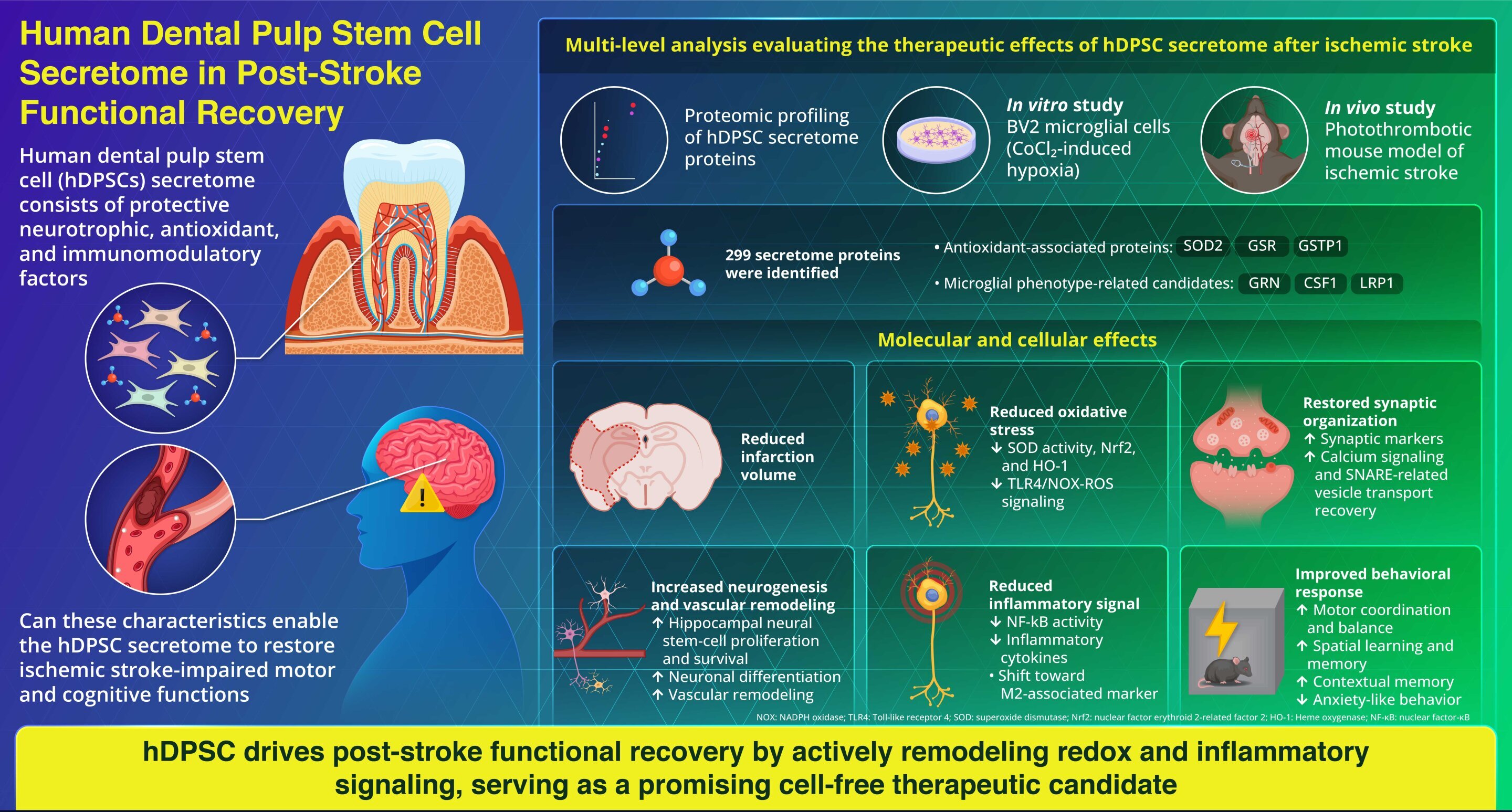
A study led by professor Won-Jae Kim from the Stem Cell Secretome Research Center, Department of Oral Physiology, School of Dentistry, Chonnam National University, South Korea, investigated whether the hDPSC secretome could improve functional recovery in a photothrombotic mouse model and examined the biological processes associated with its effects.
"By utilizing the bioactive factors secreted by stem cells rather than the cells themselves, secretome-based therapy overcomes the classic hurdles of cell transplantation, such as poor cell survival, immune rejection and tumorigenesis," explained Kim. "We wanted to investigate if the hDPSC secretome could be deployed as a safe, supportive treatment to mitigate secondary brain injury, modulate neuroinflammation and accelerate neural repair post-stroke."
The study identified 299 proteins uniquely present in the hDPSC secretome, which were primarily associated with extracellular vesicles, immunomodulation, neuroprotection, angiogenesis, apoptosis regulation and oxidative stress resistance.
Source link





