This article has been reviewed according to Science X's editorial process and policies. Editors have highlighted the following attributes while ensuring the content's credibility:
For years, developers of virtual reality (VR) and augmented reality (AR) technologies have worked to address an unwanted side effect many users experience: cybersickness, a type of motion sickness triggered by moving digital content.
In a new study published on Sept. 25, 2026, in the journal Virtual Reality, University of Maryland scientists used electroencephalography (EEG) to identify changes in brain wave activity while participants viewed virtual content designed to induce cybersickness. The findings offer real-time signals that could help designers detect and reduce cybersickness symptoms as they occur.
"VR and AR technologies aren't just for gaming anymore. They're used in health care, teaching, job training, building design and even to plan surgeries, but their effectiveness is compromised by cybersickness," said the study's first author Mattie Johnson, a UMD computer science Ph.D. student. "Our results show that EEG could complement traditional symptom questionnaires and support VR and AR systems that respond to cybersickness in real time."
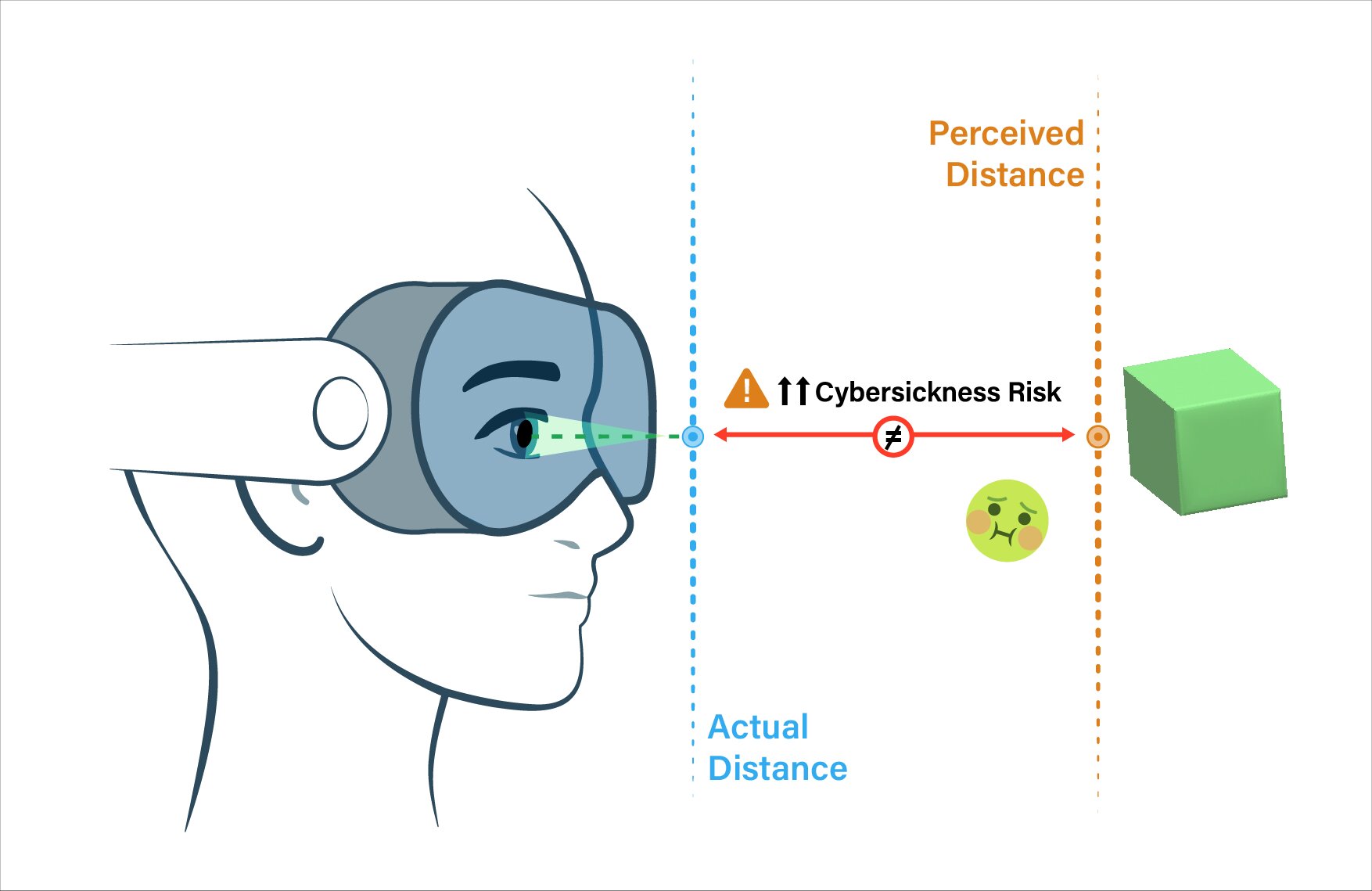
The new study, led by UMD computer science professor and Dean Amitabh Varshney, was conducted in collaboration with the Food and Drug Administration and Sony Group Corporation. The researchers focused on cybersickness associated with the vergence-accommodation conflict (VAC)—a mismatch between where the eyes converge to view an object and the distance at which they focus.
Cybersickness can cause nausea, dizziness, sweating, blurred vision, disorientation and more. 9% who reported severe symptoms.
Source link