
Four organizations will develop devices for tracking heart disease, inflammation and perimenopause.
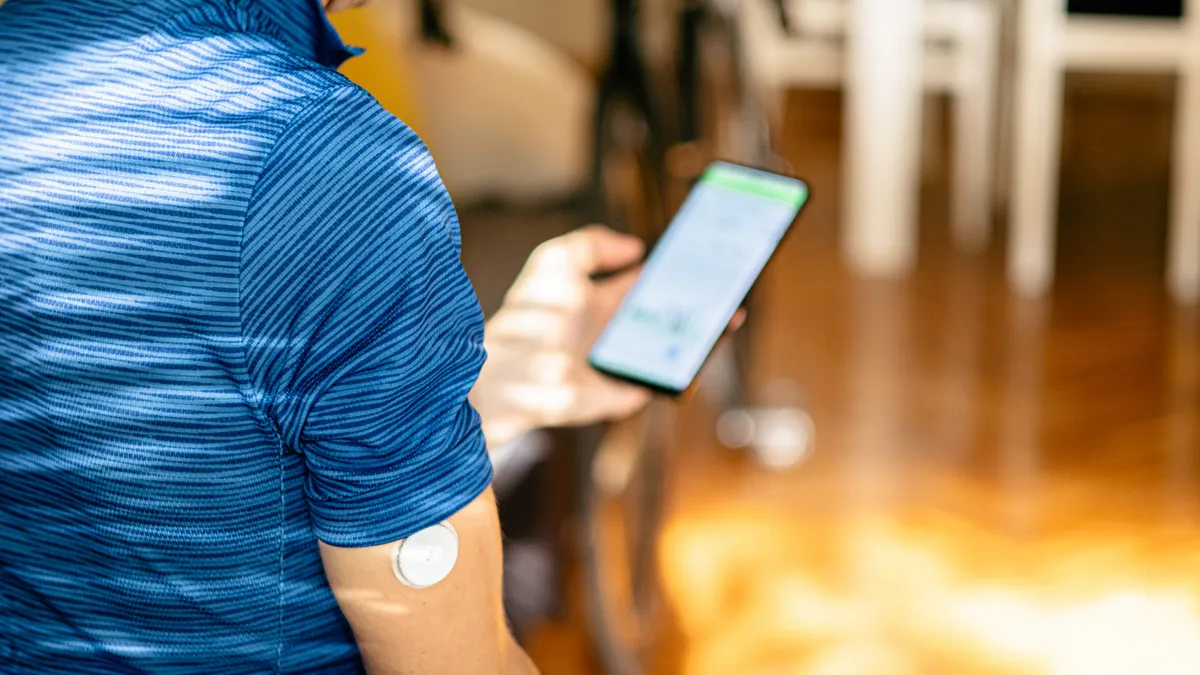
ARPA-H unveiled the program, called Delphi, in March. The Department of Health and Human Services agency outlined plans to improve on existing wearable sensors that track markers such as heart rate and blood glucose. Arguing the sector is being held back by platforms with “one-off” designs, ARPA-H built its vision on a “chiplet” approach allowing developers to mix and match biosensors.
The proposal has yielded four contracts. MIT is developing a clinical-grade, extensible wearable for continuous sensing of heart failure biomarkers. The device will be “powered by the heat generated by the patient and will deploy advanced and power-efficient on-chip AI,” ARPA-H said.
Novelna, a California-based proteomics company, will receive up to $33.2 million to develop a wearable patch for measuring post-heart attack inflammation to reduce hospital readmissions. The device will use “the human body to conduct data to maximize battery lifetime,” ARPA-H said. Novelna received the contract days after ARPA-H committed up to $25.5 million to a separate digital twin project.
New York University received the third-largest Delphi award, securing up to $30.8 million to develop a wearable patch for continuously monitoring inflammation using under-the-skin microscopic probes. The device will feature “DNA-based sensors and harvest energy from [radio-frequency] sources including Bluetooth and Wi-Fi,” ARPA-H said.
5 million to develop an ultra-low-power wearable patch to track perimenopause transitions. The team will engineer proteins to measure biomarkers from sweat. The proteins can be “refreshed and reused” by adjusting the sensor’s local pH, “helping the sensor stay sensitive and reliable over long periods,” ARPA-H said.
Source link





