
This article has been reviewed according to Science X's editorial process and policies. Editors have highlighted the following attributes while ensuring the content's credibility:
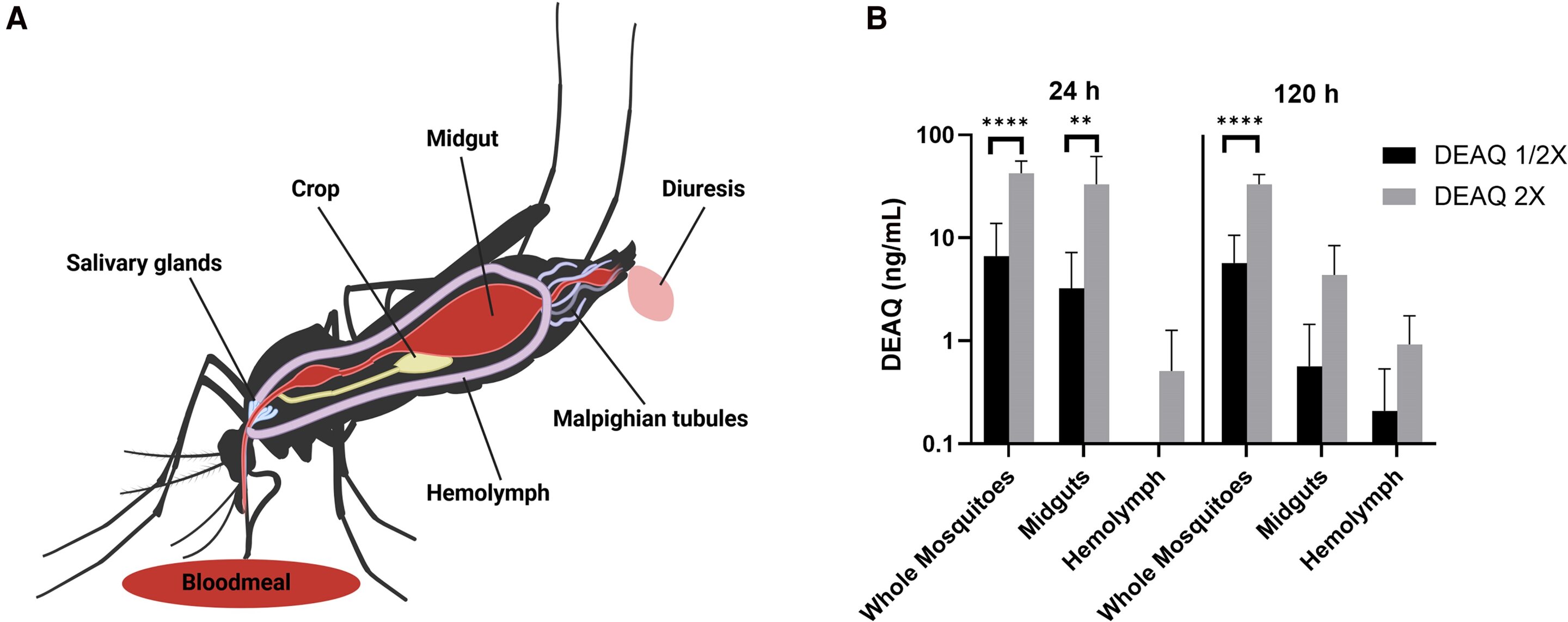
Antimalarial drugs are designed to protect people from malaria, but they may also affect the mosquitoes exposed to them during blood meals. A new Yale study, published in The Journal of Infectious Diseases, investigates the impact of these medications on mosquitoes, laying the groundwork for future research into how the drugs may influence the malaria parasites developing within them.
"I was really interested in trying to understand more about drug resistance transmission dynamics in sub-Saharan Africa," says Morgan Goheen, M.D., Ph.D., instructor (infectious diseases) at Yale School of Medicine and first author of the study. "The more we thought about it, the more it was obvious that mosquitoes must be ingesting these drugs when they feed on people who have taken them."
Malaria parasites require both humans and mosquitoes to complete their life cycle. After a mosquito feeds on an infected person, the parasites spend about 10–14 days developing inside the mosquito before they can be transmitted to another person. During that time, mosquitoes continue taking blood meals from other people. Because antimalarial drug use is widespread in malaria-endemic regions, some of those blood meals are likely to come from people taking the medications.
"We thought there was a high likelihood that infected mosquitoes are ingesting antimalarials during the time period that parasites are developing within them," Goheen says.
Source link





