
This article has been reviewed according to Science X's editorial process and policies. Editors have highlighted the following attributes while ensuring the content's credibility:
Three years ago, George Kassiotis and his team made an unexpected discovery: A specific way of producing a protein called calbindin was found to help cancer cells survive by preventing them from aging. This left Kassiotis, who runs the Crick's Retroviral Immunology Laboratory, confused. Why would a mechanism that boosts cancer growth exist in the first place?
In high amounts, calcium can become toxic. Calbindin removes calcium from the cell, and it's normally found in the brain and the kidney, where calcium levels need to be tightly controlled. But Kassiotis' team found that a certain form of calbindin was present in lung cancer cells, switched on by a remnant of viral DNA now embedded in our genome.
"This remnant is called a 'human endogenous retrovirus' or 'HERV,' a holdover from a virus inserting its genetic material into our genome during an infection," explains Kassiotis. "No longer infectious, these stretches of DNA are generally only retained over evolution if our cells have found another use for them. We thought this must be the case for the type of HERV (called HERVH) that switches on calbindin."
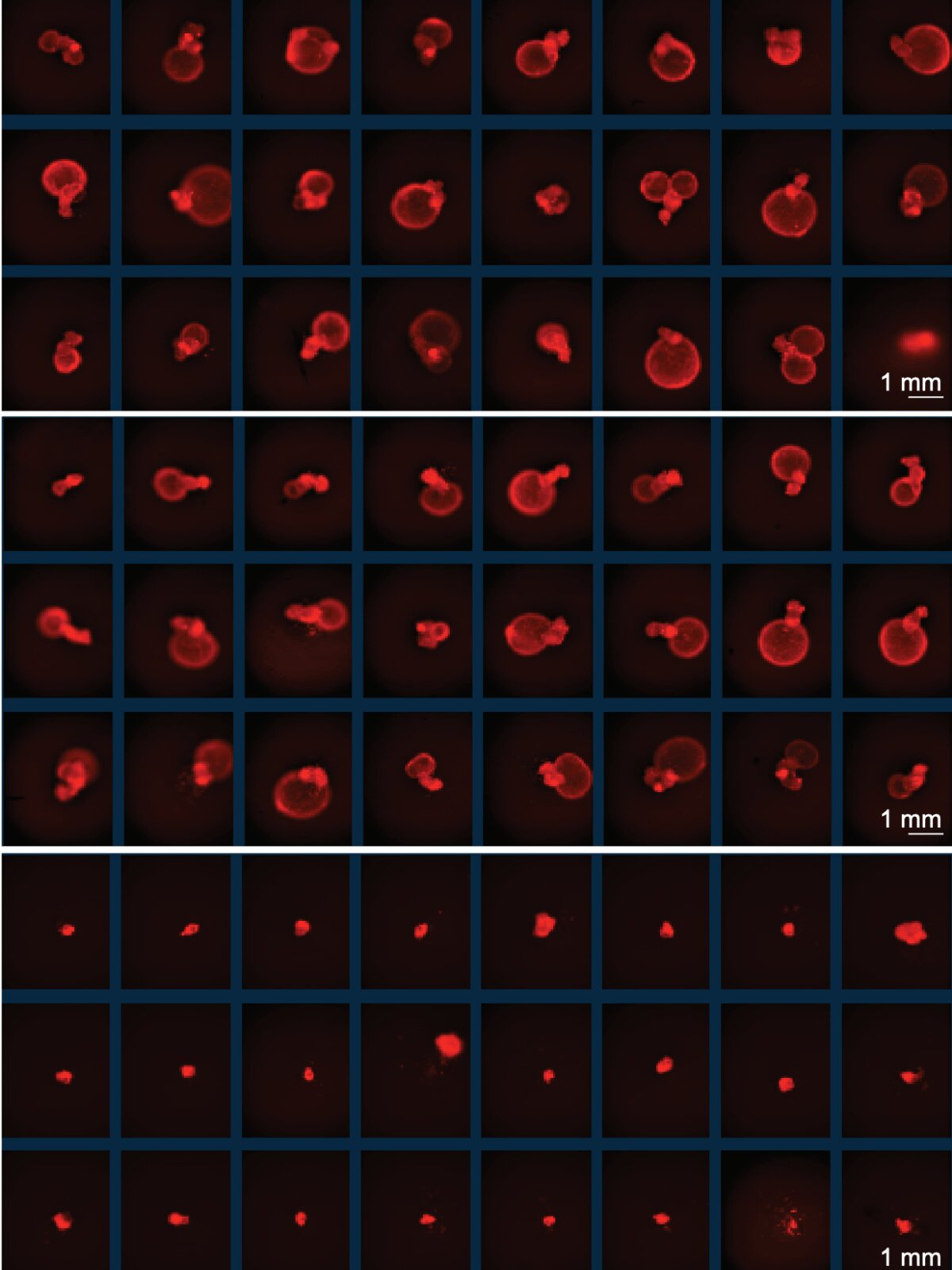
The HERV-calbindin switch had already been seen in cells that make up the early embryo, suggesting it might play a role in this critical period of development.
Judith Pape, then a postdoctoral researcher in Kassiotis' team, teamed up with Kathy Niakan's team, which pioneered genetic editing in human embryos, previously at the Crick and now at the University of Cambridge.
Source link





