
This article has been reviewed according to Science X's editorial process and policies. Editors have highlighted the following attributes while ensuring the content's credibility:
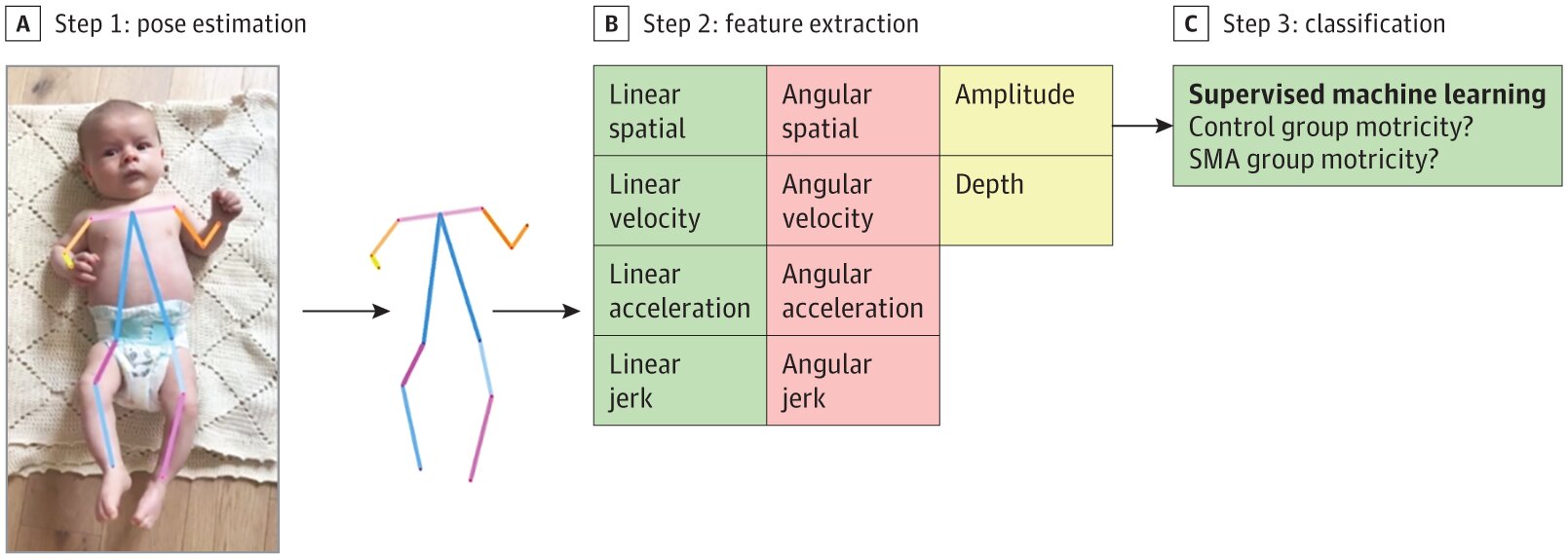
Detecting impaired motor function as early as possible after birth with the help of a standard camera linked to intelligent systems can help diagnose infantile conditions characterized by hypotonia: reduced muscle tone, which can limit active movement. A research team is investigating this approach based on work carried out on babies with spinal muscular atrophy (SMA), a rare genetic neuromuscular disorder.
In 2019, the drug Zolgensma made headline news as the world's most expensive treatment. The price of this medicine for spinal muscular atrophy (SMA) has been set at nearly 2 million euros per injection.
At the same time, what an extraordinary breakthrough! It promises to provide a definitive cure for a genetic disease that leads to extremely severe disabilities in children who survive what is the world's first hereditary peripheral neurological disorder.
Behind these staggering figures lies an urgent medical situation. For these therapies to be effective, it is essential to identify the condition as early as possible. This is precisely the challenge our team set out to tackle by using an ordinary camera coupled with artificial intelligence.
The aim was clear from the outset. Delays drastically reduce the effectiveness of the treatment. While the treatment can prevent neurons from dying, it cannot bring them back to life. Any delay in diagnosis—and, consequently, in starting treatment—represents an unacceptable loss of opportunity for patients.
Source link





