
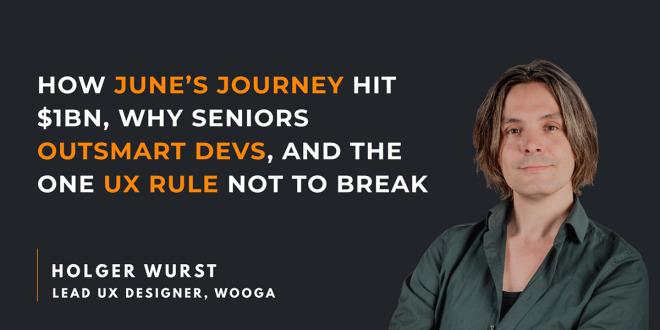
Holger Wurst joined Wooga in 2015 and now leads the UI/UX department on June’s Journey, the 1920s hidden object mystery that has passed $1 billion in revenue in 2023 and has been live for close to a decade.
He runs a team of eleven designers, animators and researchers, and joins a panel at PGC Nordics next week with one message he is happy to repeat: talk to your players.
We caught up with him ahead of his appearance at PGC Nordics to talk about all things June’s Journey, including collaborations with Wicked and Agatha Christie, AI’s possibilities and limitations, and never underestimating players.
Holger started out as an all-rounder in 3D, graphic design and a little engineering. Before June’s Journey he worked on Wooga’s first Hidden Object Game, Pearl’s Peril, and before that on games pressed onto CDs and sold in convenience stores.
Back then, he says, UX mostly meant visual communication. Did the particle effects look good, and could people read the text on a phone, a tablet and a Windows build? His reasoning for moving into the field was simple: “You can make a fantastic game, but if people don’t understand it, you’re going to waste a million dollars.”
Over time, he watched players stumble through screens that had made perfect sense in isolation. So he moved away from execution and closer to design. Today UX sits in the earliest meetings on any new feature. The player he keeps in mind is someone who heats up a coffee on a Saturday morning and plays seven rounds of hidden object at their own rhythm.
Source link