
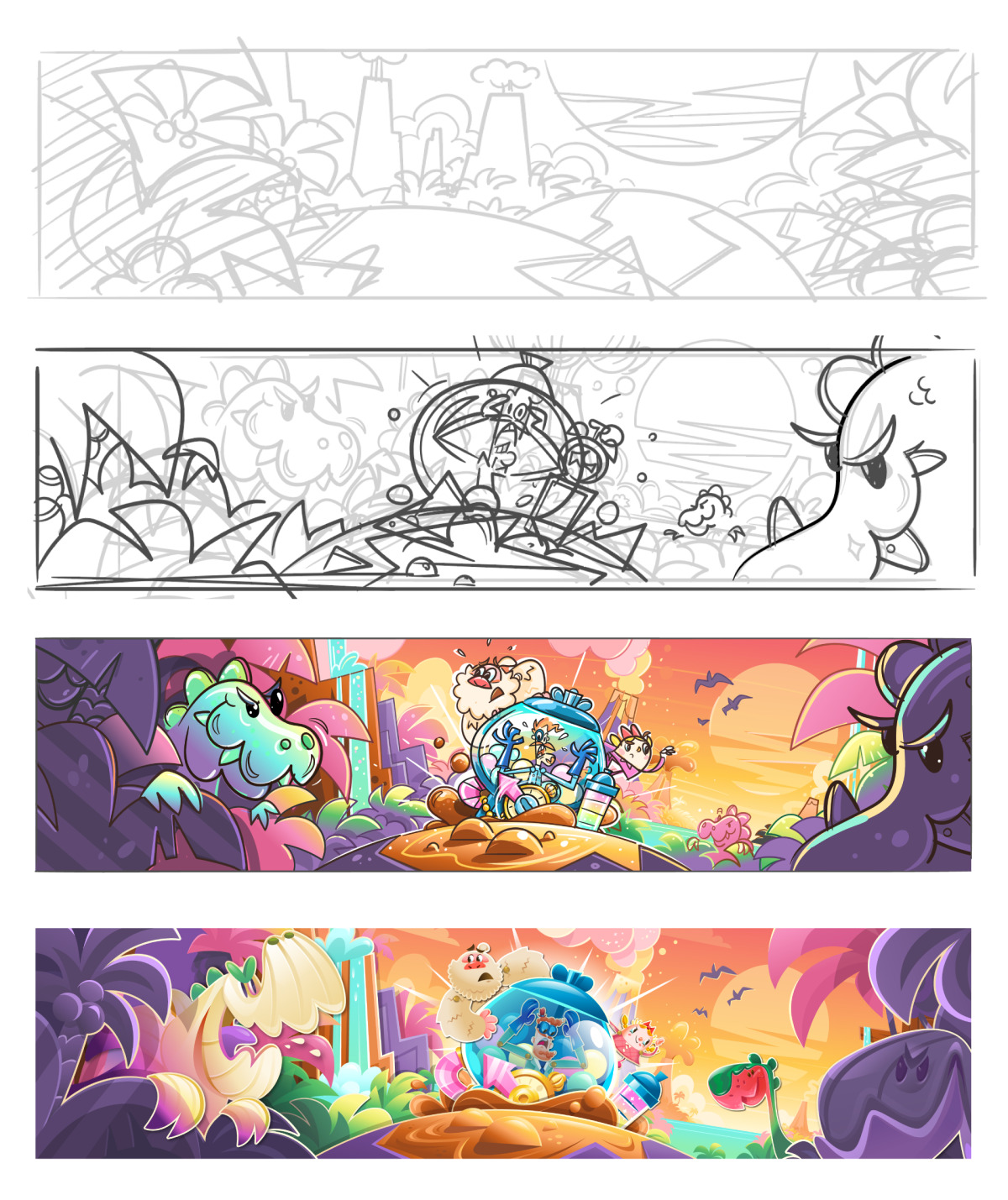
With more than 14 years of history behind it, King's Candy Crush Saga has endured through significant industry changes like rising UA costs, mobile maturation, AI, Apple’s ATT and the battle between premium and free-to-play monetisation models.
Few mobile games survive beyond a decade, but Candy Crush remains an exception that continues to place among the top titles in the global revenue charts every year.
Over those many years of operation, Candy Crush has explored various fresh aesthetics with broadening themes from sweets to aliens, fruit dinosaurs like the Chewrannosaurus Rex and more. At the same time, there remain fundamental rules to keep Candy Crush looking like Candy Crush. Even at this scale, brand recognition matters.
To find out more about Candy Crush’s artistic rules, experimentation and its diverse range of seasons, we speak with lead game artist Silvia Toma and principal game artist Emil Sellström.
Both call the Candy Crush artstyle "charming" and Toma describes it as a mix of 2D and 3D art that aims to be timeless but not old-fashioned. She says the team affectionately refers to the aesthetic as "ugly-cute", with a whole style guide's worth of rules to follow.
"The rules are pretty straightforward: make the 2D as flatly two-dimensional as possible and make the 3D look unreasonably tasty and edible," Toma shares.
"Papercraft is central to Candy Crush’s visual identity: the paper outlines, textures and halftones are instantly recognisable.
Source link