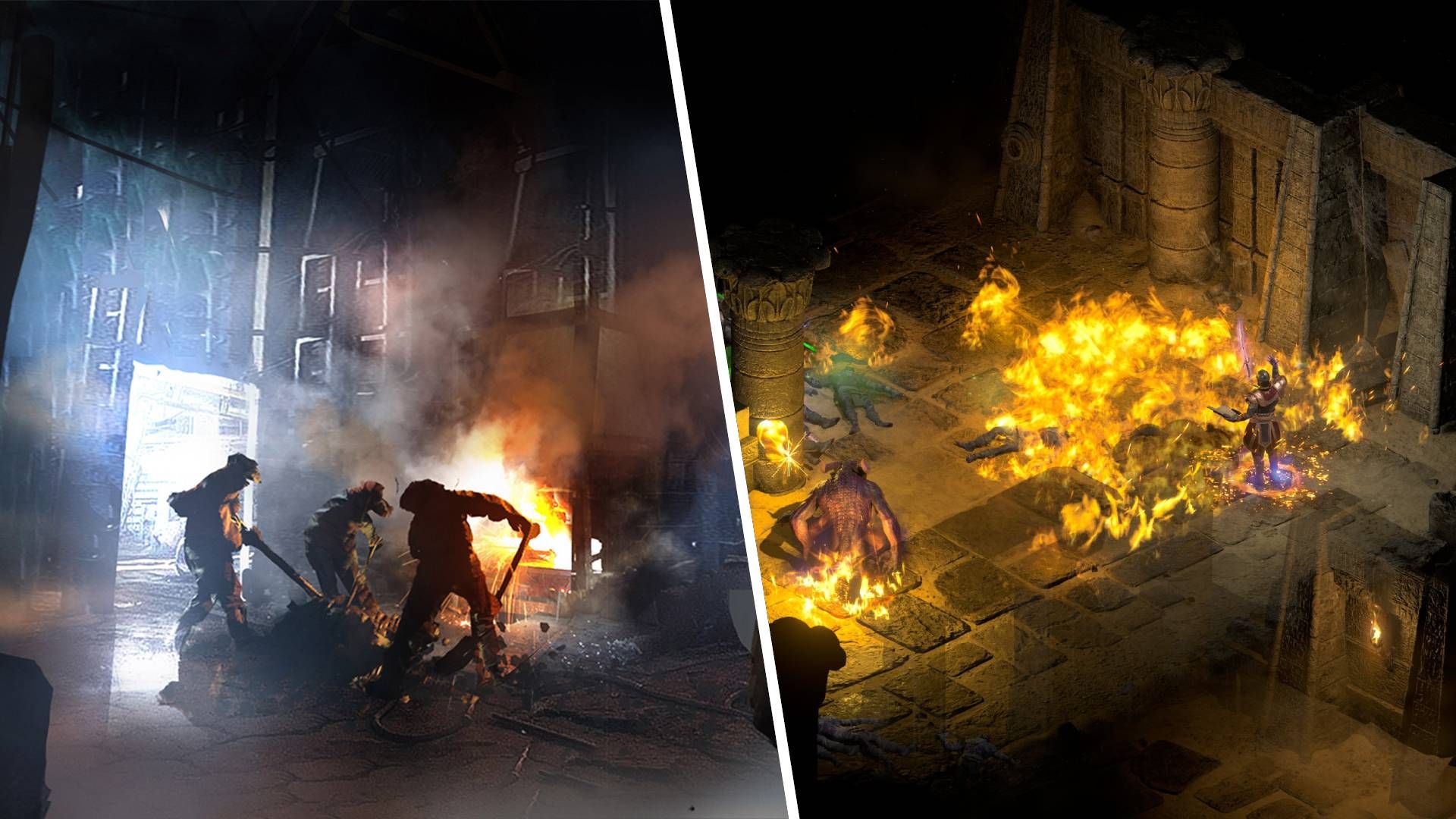
Causality Chain is a series at PC Gamer exploring the unlikely links between history, culture, and videogames.
Every time you cast a meteor spell in Diablo 2 or a cloud of daggers in Baldur's Gate 3, you are taking part in a chain of history—a causality chain, if you will—that dates back to the 18th century, when nobody had thought about taking a "warlock dip" since the Salem witch trials. And at that time, it had a very different meaning.
Today we trace the arc of history from the death of the agrarian period, all the way forward to that time you managed to set fire to five goblins at once and felt quite good about how clever you were. We chart the curious contours of cause and effect, and then we put our chins into our hands and we say, "Hmmm. Yes. This is good."
Join us as we tip the dominoes that link the past to the present, then watch the huge and intricate Rube Goldberg machine known as "history" fall over into a heap of discarded playing pieces.
1760–1840: Technological advances including improvements to the steam engine and the viability of larger blast furnaces thanks to the substitution of coke for old-fashioned charcoal—combined with various other social and economic factors—radically changes daily life for many people. During this Industrial Revolution, skilled craftsmen are replaced by machine tools and the factory system becomes widespread.
Also the social policy trees for Order and Autocracy are unlocked, and we can finally research Dynamite, Electricity, and Refrigeration on the tech tree.
Source link