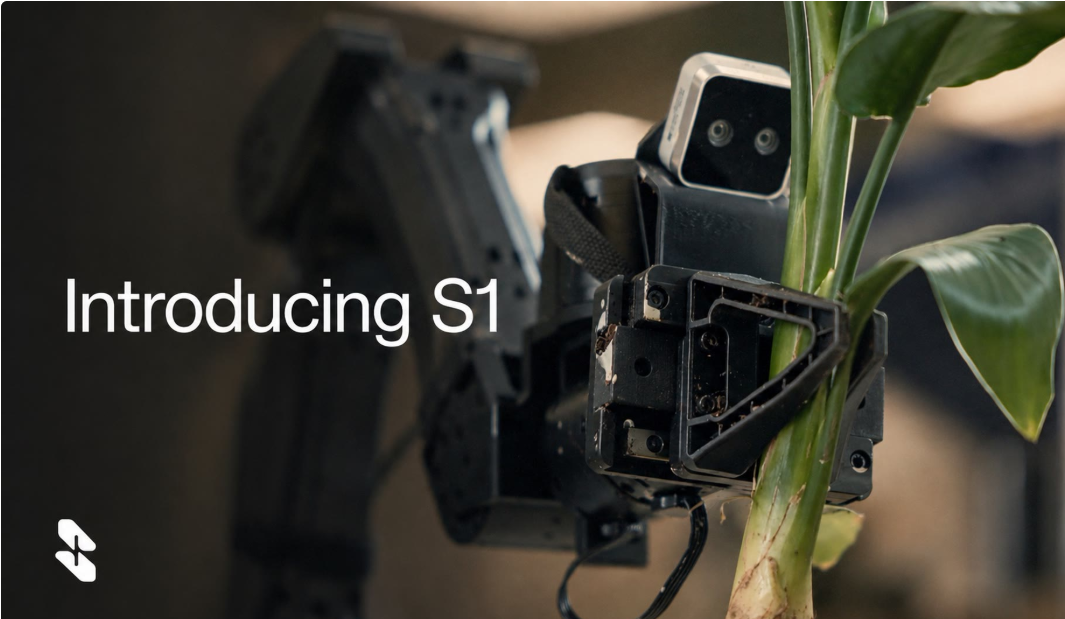
Skild AI announced a breakthrough post-training result for physical AI via self-play, where it taught its S1 robot to play soccer.
The result shows that a strong base model like S1 can learn to complete extremely dexterous and dynamic tasks, like soccer, by competing against itself in a simulation.
Last month, Skild AI introduced S1, a flagship robotics foundation model, that learns to perform tasks from in-context demonstrations similar to how language models learn from their prompts, which enables an extraordinary breadth of capability.
However, because S1-class models are pre-trained on human data, they are capped at human capability.
“We believe physical self-play will enable robots to far exceed human capability,” the company said.
Self-play ushered in the age of artificial intelligence long before the invention of language models.
AlphaGo beat world champion Lee Sedol in 2016, famously playing the “inhuman” move 37. Just three days after beginning self-play, AlphaGo Zero defeated the original AlphaGo 100 to 0. Self-play was later extended to multi-player games like StarCraft II with AlphaStar and Dota 2 with OpenAI Five, which defeated the world champions in 2019.
By discovering novel strategies that were not present in their training data, self-play allowed AI to complete tasks of staggering complexity at a super-human level.
The concept of self-play for recursive improvement subsequently lost momentum, as reinforcement learning from verifiable rewards emerged as the simpler, more immediately viable approach.
With these exciting new results, Skild AI hopes to revive the field’s interest in self-play and transform it from a relic of digital AI to a fire-starter for physical AGI.
Source link