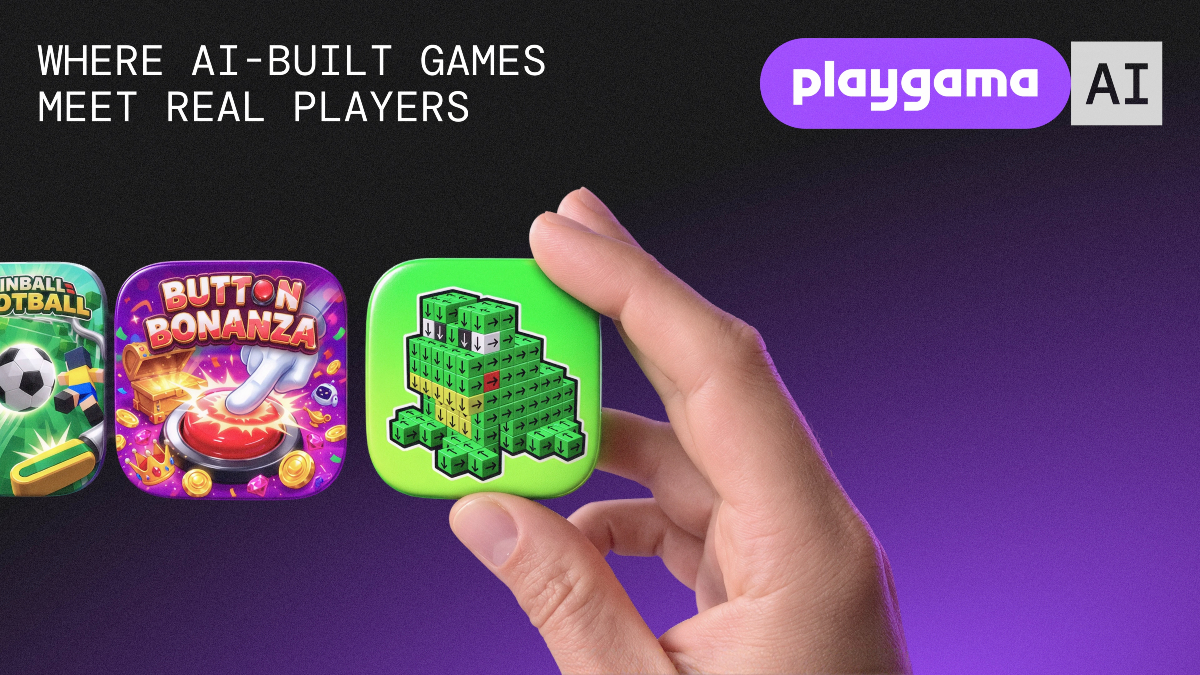
Playgama is launching a suite of tools that covers the full iteration cycle for games built with AI agents. The way it works is that a developer asks their agent to publish a game, and it goes straight to Playgama Sandbox, where people can start playing immediately. The game collects player data, the agent analyzes it and improves the game, then publishes an updated version. Players try the new build, more data comes in, and the cycle continues.
September has brought a run of frontier model releases, with OpenAI’s GPT-6 Astra and Anthropic’s Claude Opus 5.5. These releases have fueled a surge of AI-generated games, most of these demos, run in the browser. Web-based and HTML5 games have become the testing ground for agentic game development, since they’re lightweight, accessible, and built entirely from code, without the visual editors and binary formats that, for now, make major engines harder for AI agents to work with.
As AI models keep evolving, a growing number of enthusiasts are building games with their agents, and making full use of these technologies calls for a new ecosystem and new tooling. Playgama has built a set of tools to help this new generation of games grow.
According to a press release, the new ecosystem for AI-built games has three parts:
To publish a game, developers simply ask their AI agent, right inside Claude Code or Codex, to publish it on Playgama. The agent handles the upload in minutes and returns a live, shareable link, with no manual work required.
Source link