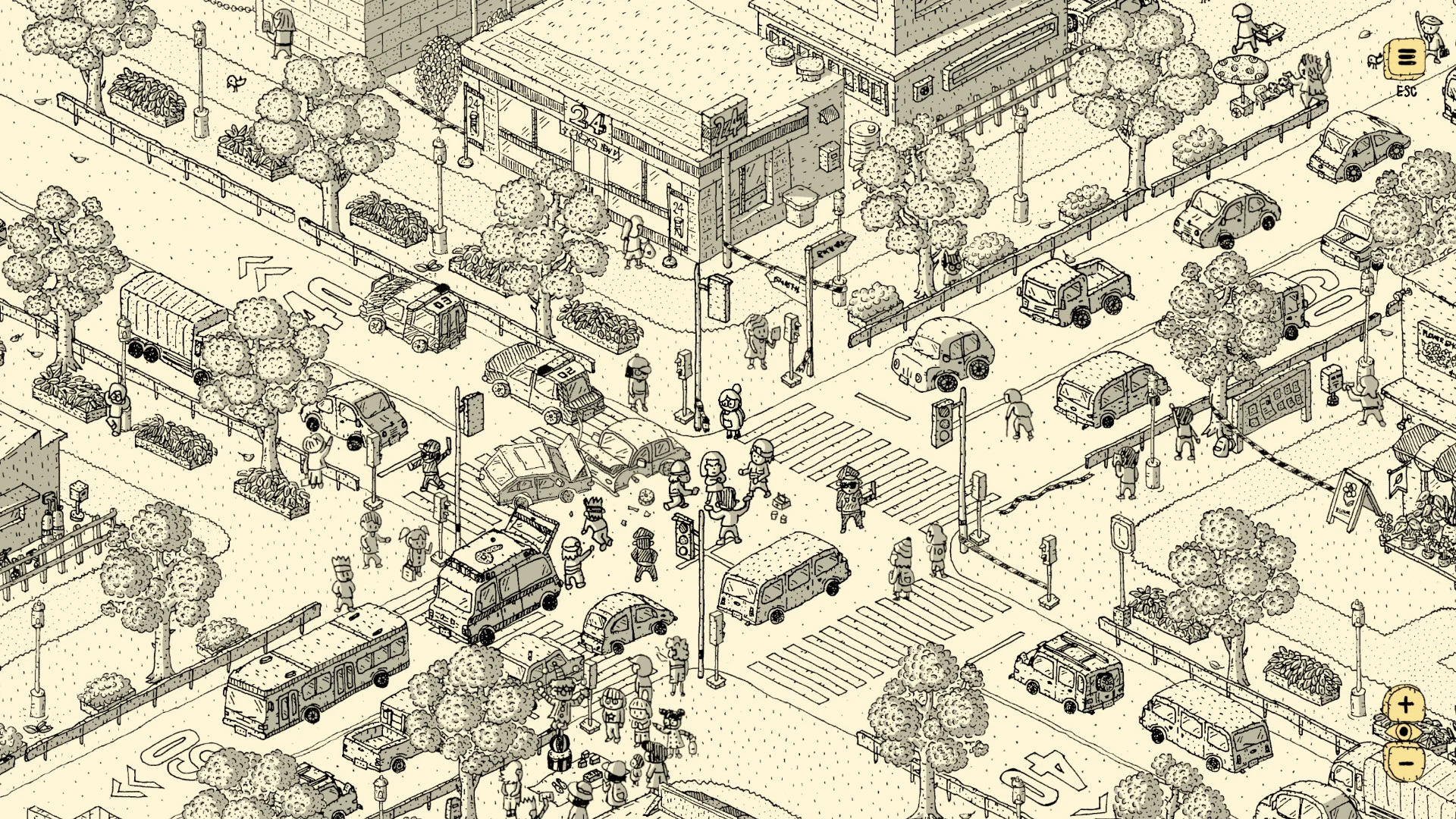
Tokyo Game Show 2026 was light on major upcoming releases, in part due to a quieter-than-normal fall for gaming outside of the unavoidable spectre of Grand Theft Auto VI. That being said, there were still things to see at this year’s event—you just had to know where to look. Take a glance at the world of Japanese indie gaming showcased on the convention floor, for example, and you would find a wonderful assortment of unique experiences rooted in Japanese social issues and experiences, the results of a notable divergence from how Japanese indie games have historically been developed, supported, and shared with players.
It may be somewhat surprising that it’s taken until the last few years for a groundswell of Japanese indie developers to establish themselves within the domestic games industry. Indie gaming has thrived since the late 2000s outside of Japan thanks to digital storefronts on consoles, and Japan itself is host to events like Comiket, where both amateur original and derivative works in various art forms, including video games, can be sold. These works are known as doujin.
At their core, doujin games were acts of love created by hobbyist developers to sell to core fans, whether original or derivative of another IP. The Touhou franchise, arguably the biggest example of Japanese independent gaming media in the past 30 years, rose from this subculture. Otherwise, however, doujin has been mostly a passion-fueled endeavor, a way to share creations with like-minded fans more than a path to profit or a potential career.
Source link