What counts as stolen goods, who brings them in, and how to get away with selling them in Probably Stolen.
You know, for a game labeled Probably Stolen, it's pretty easy to play an entire run without dealing in stolen property at all. But that's no fun; who doesn't want to play the bad guy sometimes? Or at least, the morally grey guy.
If you're interested in dealing with some not-so-legally-acquired goods to make a profit, here's what you need to know and who you need to avoid.
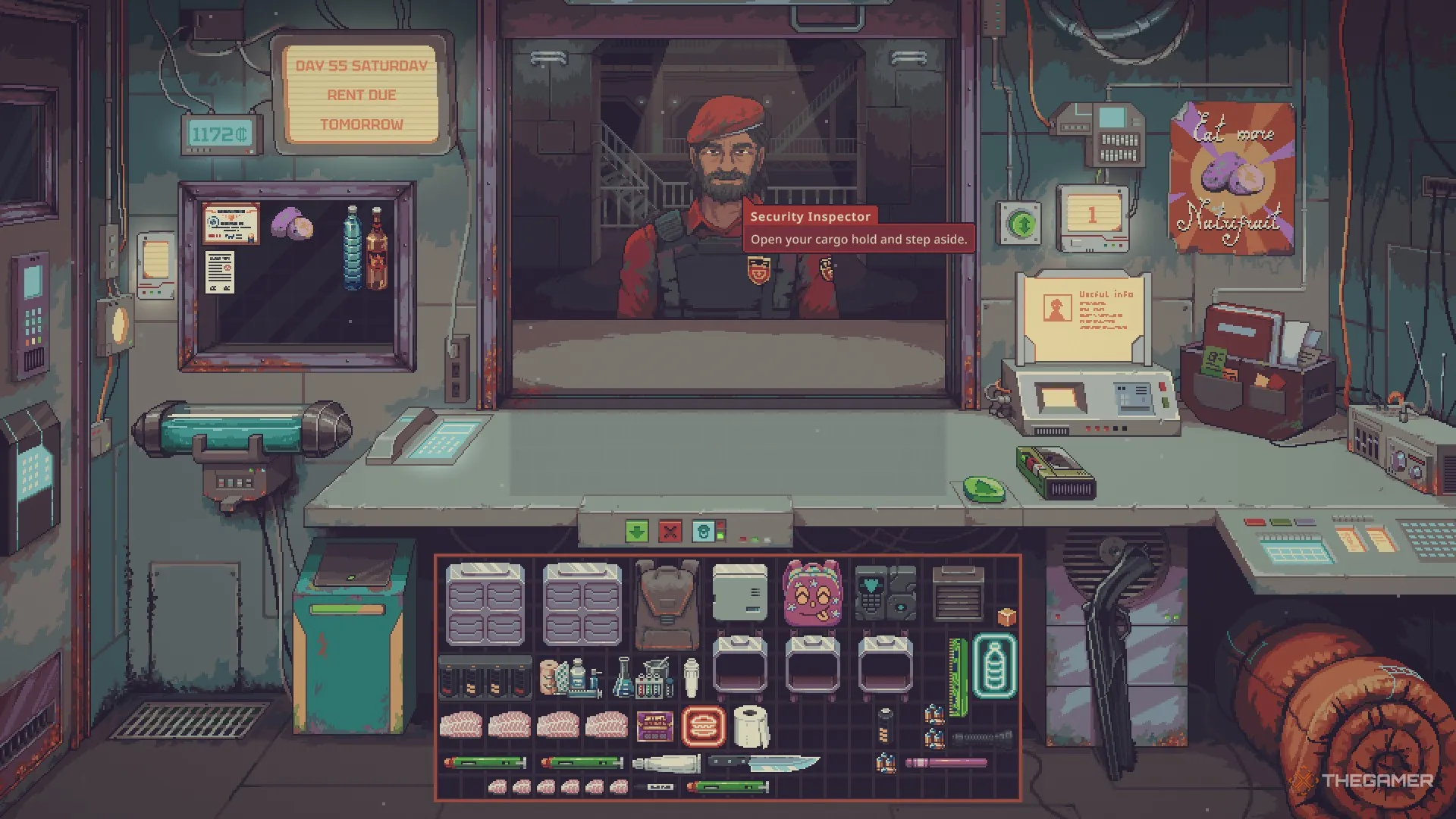
Typically, stolen goods will be things like pharmaceuticals, chemistry products, or sometimes food. All stolen goods will have some level of heat attached to them based on their value in credits. Heat is the game's metric for how obviously stolen they are — higher heat objects will be easily identified as stolen by buyers and Security, while low heat items might be easier to get away with. Heat disapates over time; the longer you have the item in your inventory, the less attention it'll attract. When it hits zero heat, it's no longer considered stolen and can be sold normally.
Stolen goods are also typically sold by a shady customer or, in some cases, wanted criminals. They'll say something to the effect of needing to get rid of their goods quickly, of "finding" them, or similar phrasing. Sometimes the customer will simply be labeled Thief, which does make identifying them much easier, but sometimes you'll be buying from a chemist or pharmacist who's stolen from their workplace.
Source link