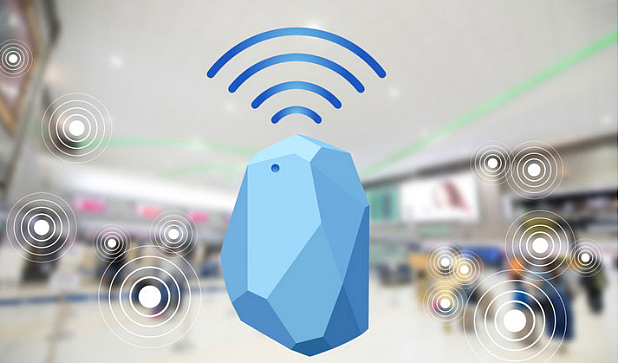
Finding a particular item within large-scale infrastructure sounds easy, but the task becomes challenging if the item is constantly changing its position. For instance, a hospital’s cart may be moved from one floor to another, a warehouse’s tool may be transferred from one station to another, or even a visitor within a large-scale venue may have problems finding their way. A bluetooth beacon is a great technological solution that helps in such scenarios to make spaces easy to navigate and find.
This technology functions by utilizing wireless communication means with Bluetooth Low Energy transceivers to send and receive small packets of data to and from an application running on an enabled device, such as smartphones or gateways.
The main advantage is that devices are simple. The device does not need to remain in communication with every receiver. They only have to send out packets of information at regular intervals.
A device within range will receive the signal and forward the information to a program or management system. With the information, the application can make decisions and perform actions.
For instance, a warehouse management system can see that a trolley with a tag has entered the loading bay. A museum app could know that a visitor is close to a particular item of interest. An office management system may track equipment being moved between rooms.
All this is possible without having to attach complicated or power hungry computers to every object of interest.
Battery lifetime is one of the most critical parameters for any system that involves tens or hundreds of wireless devices, and the last thing a company would want is to deal with constant battery replacements.
Source link