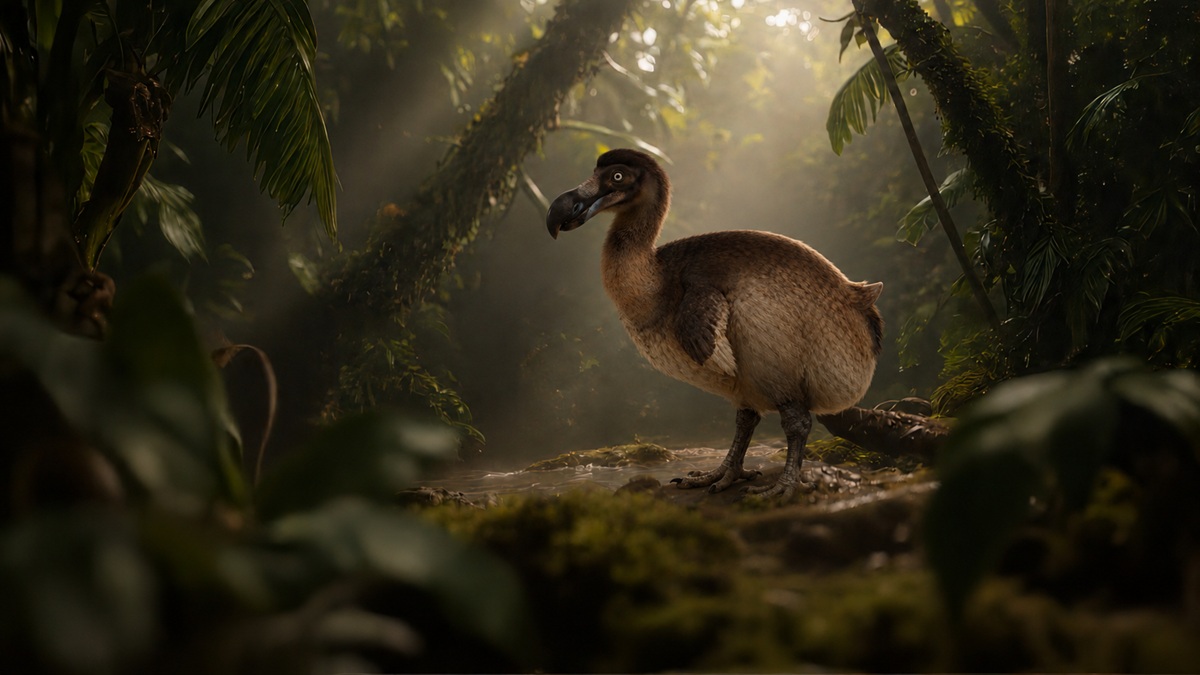
Colossal Biosciences, the world’s first de-extinction company, announced new scientific milestones that will accelerate dodo de-extinction efforts — or bringing back the extinct dodo bird.
Building on last year’s advances in pigeon primordial germ cells, gene-edited chicken surrogates and comparative avian genomes, today Colossal unveiled GenoMorph, its AI platform developed to identify potential gene-editing targets from limited genomic data. Applied to the dodo program, the platform identified an estimated 2,300 candidate regulatory elements associated with avian beak size and shape.
It’s a pretty ambitious effort, and the company said once before it was making better progress than expected. And the firm has convinced investors to give it hundreds of millions of dollars to develop the science to bring back lost species. There are skeptics, but it is interesting to note that the company has already claimed success in bringing back dire wolves. The company has raised $615 million and it has 270 employees.
And previously, Colossal said it had figured out how to make artificial eggs to breed avian species. The artificial egg will be useful for the purpose of hatching eggs, but the company still has to make progress on the genetics behind making new birds.
Colossal also announced advances across its avian de-extinction pipeline, including substantially improving the dodo genome assembly through the use of technology from its dire wolf project, an expanded Nicobar pigeon colony, newly derived Nicobar primordial germ cells, chicken embryonic-stem-cell chimeras and a breakthrough lipid-nanoparticle system for gene editing delivery in avian embryos.
Source link