
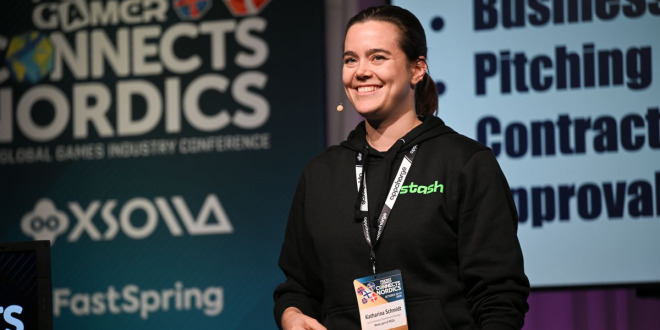
Most game developers are used to moving relatively fast. Stash associate director of business development Katharina Schmidt's advice for anyone hoping to bring a famous brand into their game is to slow down.
"In mobile games especially, we're used to quick turnarounds," she told the audience at PGC Nordics last month, in a session titled 'A playbook for IP collaborations'. "But contracts still need to be done with clarity and at the pace that is required to make sure the details are in place."
Schmidt spent four and a half years leading business development on the Angry Birds IP at Rovio. There she negotiated the China publishing deals for Angry Birds 2 and Angry Birds Dream Blast, and took the brand into other games, cars and TVs. Schmidt had started a new role at Stash the day before her talk and stressed that the views she shared were her own.
The first is paying for the licence, either as a flat fee or a revenue share. A flat fee is predictable, but the developer carries the risk if the collaboration underperforms. A revenue share needs careful sums to make sure the game's economics still work. "It requires some patience and some Excel math," she said.
The second is a visibility-based deal, where both sides benefit from the exposure rather than money changing hands. That is a hard sell for a small mobile game approaching one of the world's biggest IPs. But it can work if the brand wants to reach new countries, audiences or age groups.
Source link