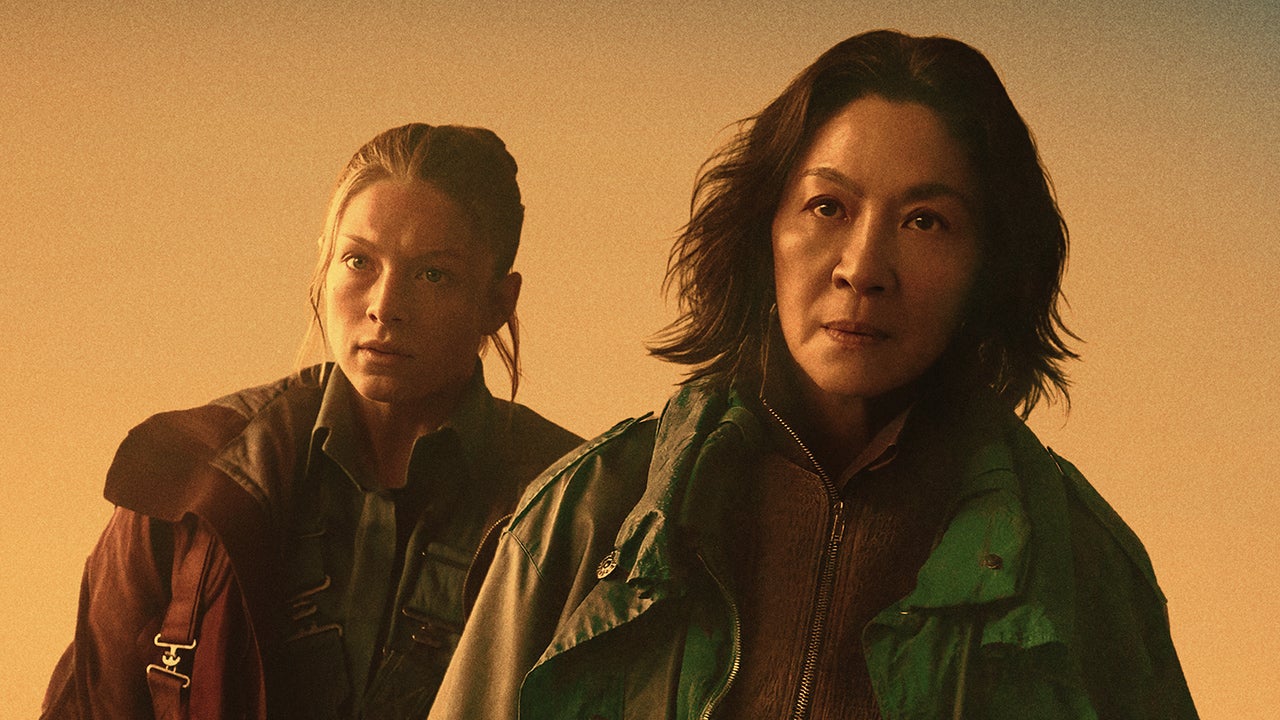
So says Michelle Yeoh’s Olwen, one of the two leads of Prime Video’s upcoming series Blade Runner 2099. Picking up 50 years (obviously) after Blade Runner 2049, the dystopian future world that was first brought to the screen by Ridley Scott is in many ways the same in the show as it was in that 1982 film – vast cityscapes, flying cars, teeming masses, and big-as-hell shoulder pads.
But in other areas, things have changed significantly. Perhaps most notably, the Replicant underclass – androids designed by man as slave labor – have overtaken their human overseers after a war between the two races. Now it’s humankind that lives under the heel of the Replicants. And as Olwen says, it’s their time now…
In advance of Blade Runner 2099’s New York Comic Con panel on Saturday, we spoke to series creator Silka Luisa and production designer Paul Inglis about recreating the world first envisioned by Scott, and then Denis Villeneuve for Blade Runner 2049, and how channeling the Replicants versus humans dynamic – and the blurring of the line between the two groups that both films did so well – informed not only the design choices behind the new show, but also how the characters of Yeoh’s Olwen and Hunter Schafer’s Cora would take the latest chapter of Blade Runner to a new level.
The Blade Runner films (and the 1968 book on which the original film was based, Philip K. ) have always played with the idea of identity, be it the age-old question of whether or not Harrison Ford’s Rick Deckard is a Replicant, Ryan Gosling’s Agent K’s delusions of grandeur about being some kind of “chosen one,” or now, in 2099, Schafer’s Cora playing a human who is forced to pretend to be a Replicant Blade Runner… who, by the way, now hunt down rogue humans rather than Replicants.
Source link