Bitcoin has spent years sitting outside the DeFi boom. Ethereum has decentralized exchanges, lending markets and stablecoins. Solana built its own trading ecosystem. New chains launched with entire financial stacks ready from day one. Bitcoin mostly kept doing what Bitcoin does, moving BTC and securing the network.
So crypto found workarounds. Take Bitcoin, lock it somewhere, issue a token that represents it on another blockchain, and suddenly that value can move through DeFi.
Wrapped Bitcoin became a major part of the market because the idea works. But it also created a strange situation. To use Bitcoin across crypto, users often had to stop using Bitcoin itself.
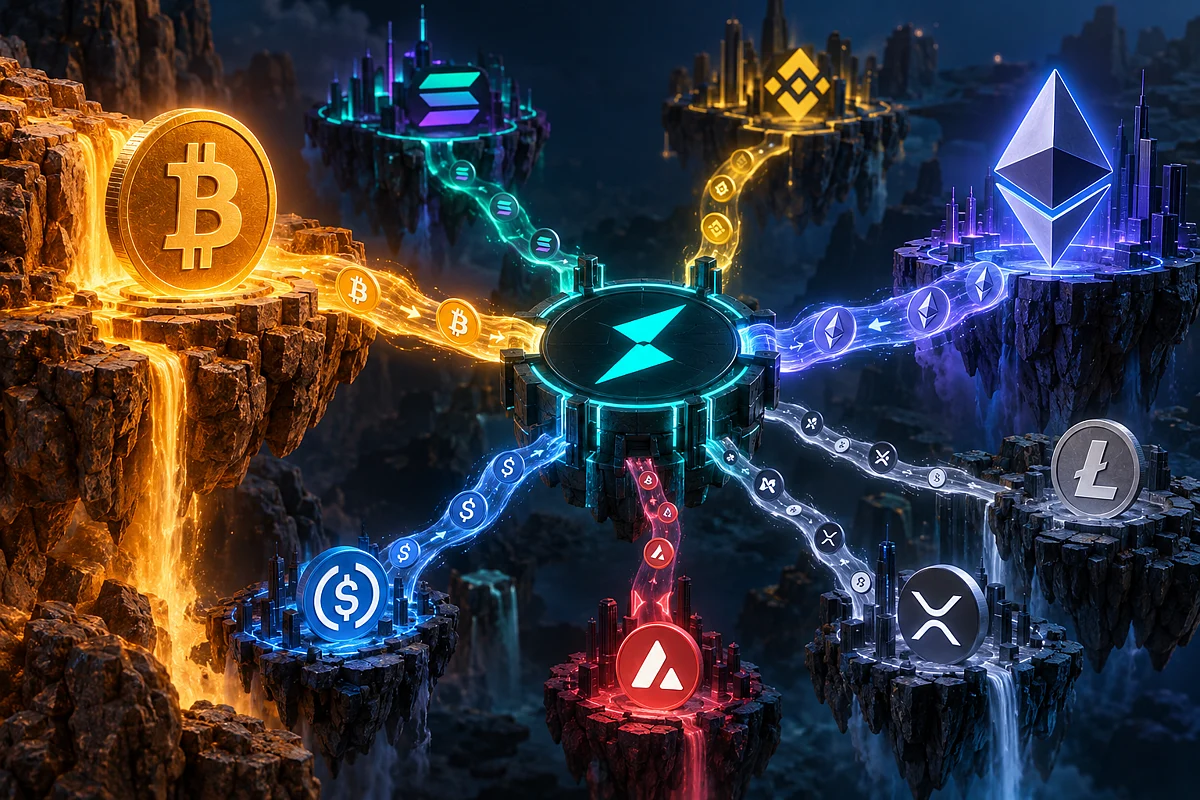
There is now another option. Instead of rebuilding BTC as a token on somebody else’s blockchain, protocols can connect directly to Bitcoin and trade the native asset where it already lives. THORChain has spent years building around that idea.
Most DeFi markets are built inside individual blockchains. ETH and ERC-20 tokens can interact easily because they live in the same environment. The same goes for assets inside Solana or other smart-contract networks. Bitcoin is somewhere else entirely.
If someone owns BTC and wants ETH, there is no native Bitcoin function that simply hands the transaction over to Ethereum. The two networks were never built to talk to each other. Wrapped assets then must jump in to fill the gap.
A user deposits BTC into a system that holds or secures it, and another token is created elsewhere. That token tracks Bitcoin’s value and can then be traded, lent or deposited into applications on the destination chain.
Source link