House House's Jake Strasser unpacks one of 2026's most celebrated multiplayer experiences
House House's Jake Strasser unpacks one of 2026's most celebrated multiplayer experiences
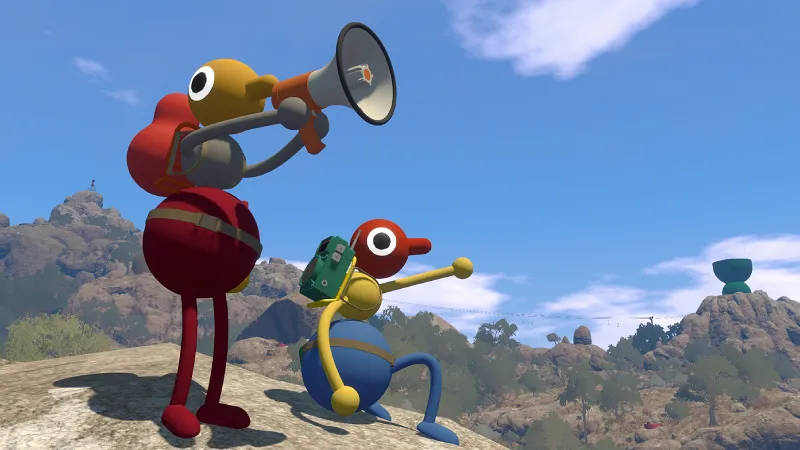
Big Walk started as a respite from the reality of lockdown. The team at House House (Untitled Goose Game) needed to get out of their house houses at a time when they couldn’t. So they built a new way to chat. That became a new way to play. That became an island to call their own. That became a playground on which they could fundamentally rethink and challenge the multiplayer co-op experience. Big Walk started small, then grew and grew and grew.
Earlier this month, the team at House House found itself at the middle of a minor scandal: As it noted in a statement, added to Big Walk’s FAQ, there was a point where a lighting physics issue in Unity, the engine with which they built the game, seemingly had no answers (or as a Unity engineer told them: “what we wanted wasn’t possible.”) The team resorted to using an LLM chatbot to crack the literal code and allow for their vision to take shape.
On Nov. 19, a group of influential members of the Indie Game Festival's jury released a statement saying they wouldn't vote for any game that used gen-AI tools (which includes Big Walk ) for this year's awards. This immediately resulted in a storm of debate around the art of code, the degree to which LLM usage demands AI disclosure, how ethically minded players should interpret “AI usage,” and the emerging minefield that technology has created for developers who aim to make a truly great game.
Source link