Being Heumann is in theaters now and debuts November 13 on Apple TV.
Disability activist Judith Heumann has the perfect name for a story about forcing politicians to acknowledge the humanity of an underclass. More perfect still is the title of her memoir, Being Heumann, which CODA director Sian Heder turns into a straightforward but occasionally rousing biopic revolving around a political sit-in, a film whose authentic casting is a vital part of its form.
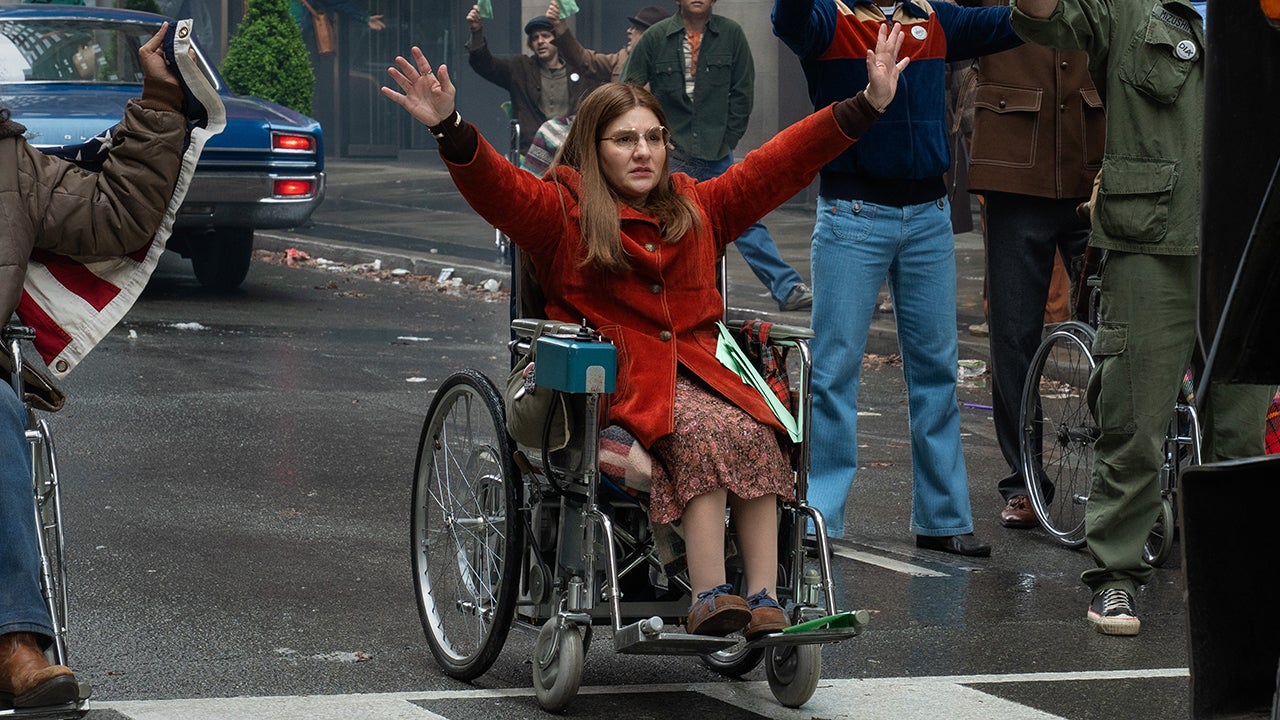
Beginning with a failed streetside protest in 1972, the movie zips forward several years into the work of a bustling coalition with busy offices. The year is 1977, and the wheelchair-using Heumann, aka Judy (Ruth Madeley, a wheelchair-user herself), is among a group of several protesters furious with the Department of Health, Education, and Welfare’s (HEW) preening secretary Joseph Califano Jr. (Mark Ruffalo) for refusing to sign a vital equality act into law. Some in Judy’s camp are blind or Deaf; others are para- or quadriplegic; and a small handful are able-bodied allies from queer or racial advocacy groups like the Black Panthers. As they gather outside the HEW offices in San Francisco, Judy makes impromptu demands for a building occupation until Califano Jr. signs the aforementioned legislation, referred to as “Section 504.”
There is, however, a moral wrinkle to Judy's plan. Her cohorts soon discover that she packed a toothbrush; it was always her plan to enter the building and stay overnight. That the fierce equality advocate refused to share this with her protesters makes her self-absorbed in a particularly compelling way, as her eyes are gradually opened to the ways in which her actions do or do not gel with her fellow protesters.
Source link