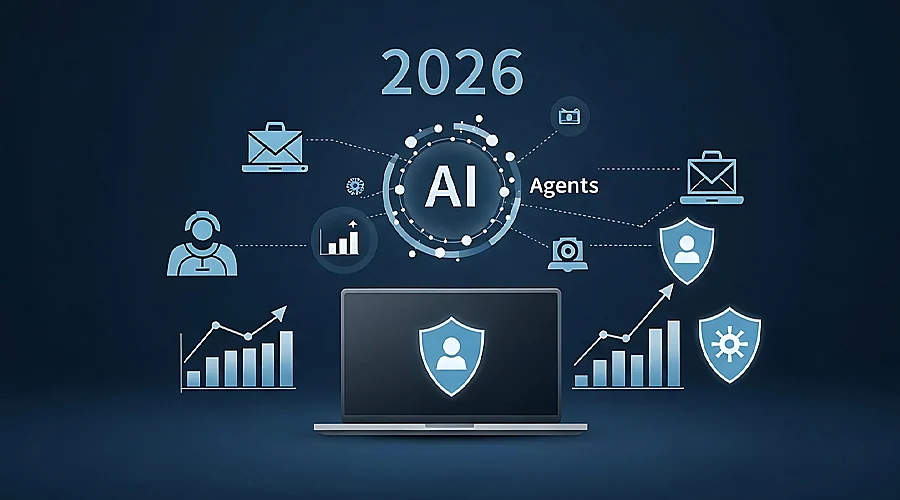
Agentic AI Is Moving Into Business Workflows: AI is moving beyond chatbots and into autonomous workflows. AI agents can plan tasks, use business tools, and complete multi-step processes. Companies are also testing multiagent systems where different agents handle research, analysis, approval, and execution with human oversight.
Smaller AI Models Are Making Enterprise AI More Efficient: Businesses are not always relying on the biggest AI models. Smaller, domain-specific models can handle tasks such as document processing, customer support, internal search, and invoice extraction. These models can reduce costs and latency while giving companies greater control over sensitive business data.
AI Infrastructure Is Becoming a Business Priority: The growth of AI is increasing demand for powerful computing infrastructure. Companies are combining GPUs, CPUs, specialized chips, cloud systems, and edge computing to handle AI workloads. Local and hybrid infrastructure can also help businesses manage latency, privacy, and large volumes of data.
AI Is Strengthening Cybersecurity and Governance: As AI becomes more autonomous, businesses need stronger controls around access, data, and model behavior. AI can detect unusual activity and support faster threat response, while governance systems help track agents, permissions, risks, and compliance. Security is becoming part of the AI development process.
Physical AI Is Bringing Intelligence Into the Real World: AI is moving from screens into factories, warehouses, logistics, and other physical environments. Intelligent robots can support quality inspection, predictive maintenance, warehouse operations, and manufacturing tasks. This is creating a stronger connection between AI software and real-world automation.
Multimodal and Voice AI Are Entering Core Operations: AI systems can now work with text, images, audio, video, and documents in a single workflow.
Source link