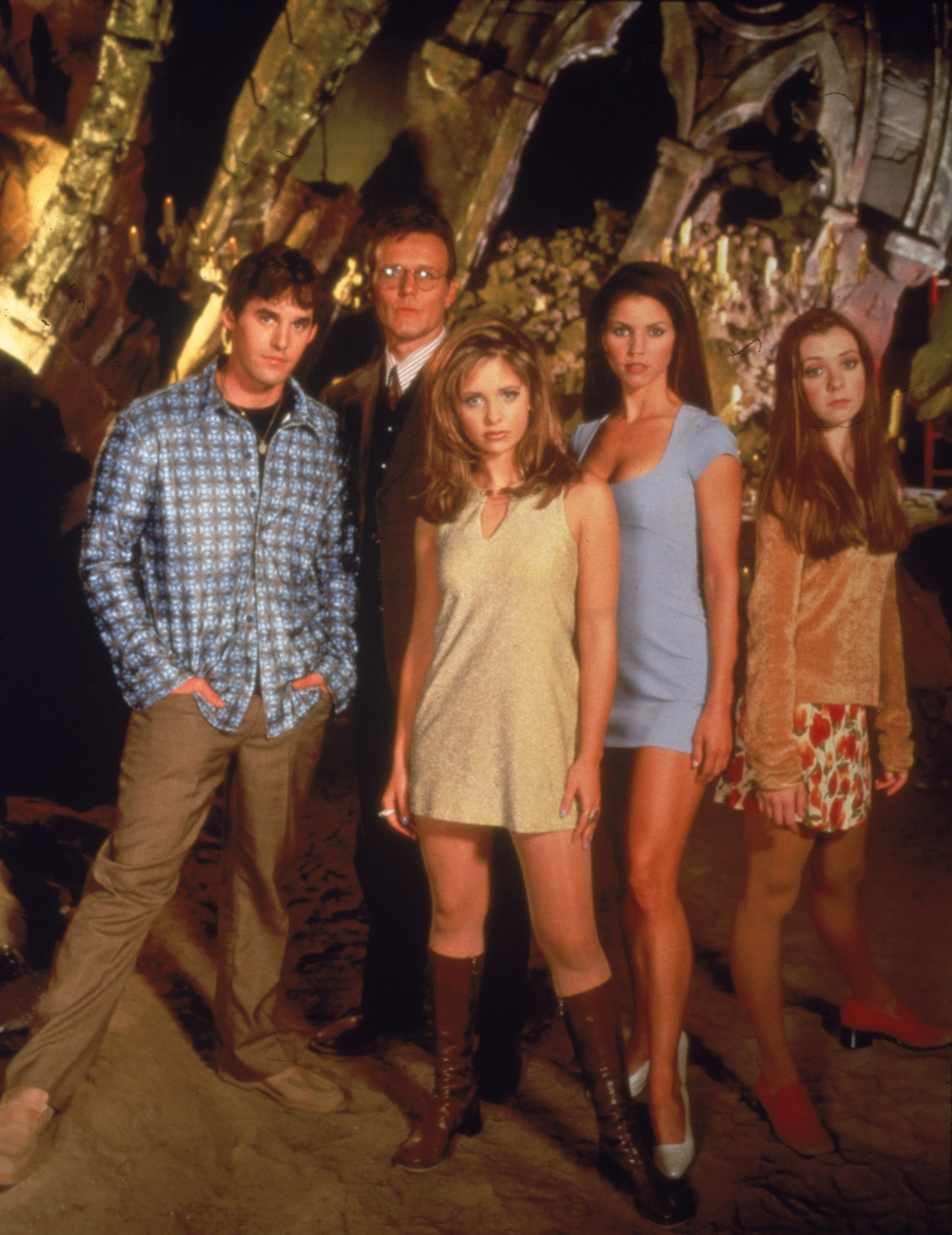
Part of why the streaming model of TV is flawed is that so many shows get canceled after just one short season. If that had always been the policy, we wouldn't have gotten most of the classics of television, as every show usually needs at least a few episodes to work out its early kinks. This process is sometimes referred to as "growing the beard," a reference to Star Trek: The Next Generation, which only got good once William Riker (Jonathan Frakes) stopped showing up to work clean-shaven. (That was probably a coincidence.)
In the case of Buffy the Vampire Slayer, its early-installment weirdness lasts for its first 18 episodes. While there are a few standouts, such as "Nightmares," "Angel," and "Prophecy Girl," early Buffy relied heavily on a monster-of-the-week format.
It's important to remember here that Buffy began its run as a mid-season replacement. All that was really being asked of it early on was to fill a hole in the network schedule. The show was initially made as a throwaway, and many of Buffy's early episodes are deliberately disposable.
In addition to the vampires, Buffy and her crew spend half of the first and part of the second season working their way through a murderer's row of classic Western monsters. That includes witches ("Witch"), a gender-flipped Invisible Man ("Out of Mind, Out of Sight"), some species -flipped werewolves ("The Pack"), Frankenstein's monster ("Some Assembly Required"), and a killer mummy ("Inca Mummy Girl"). If Buffy was a 2026 Netflix original, it’s hard to imagine it lasting past its first eight-episode season, and “Inca Mummy Girl” is a good example of why.
Source link