

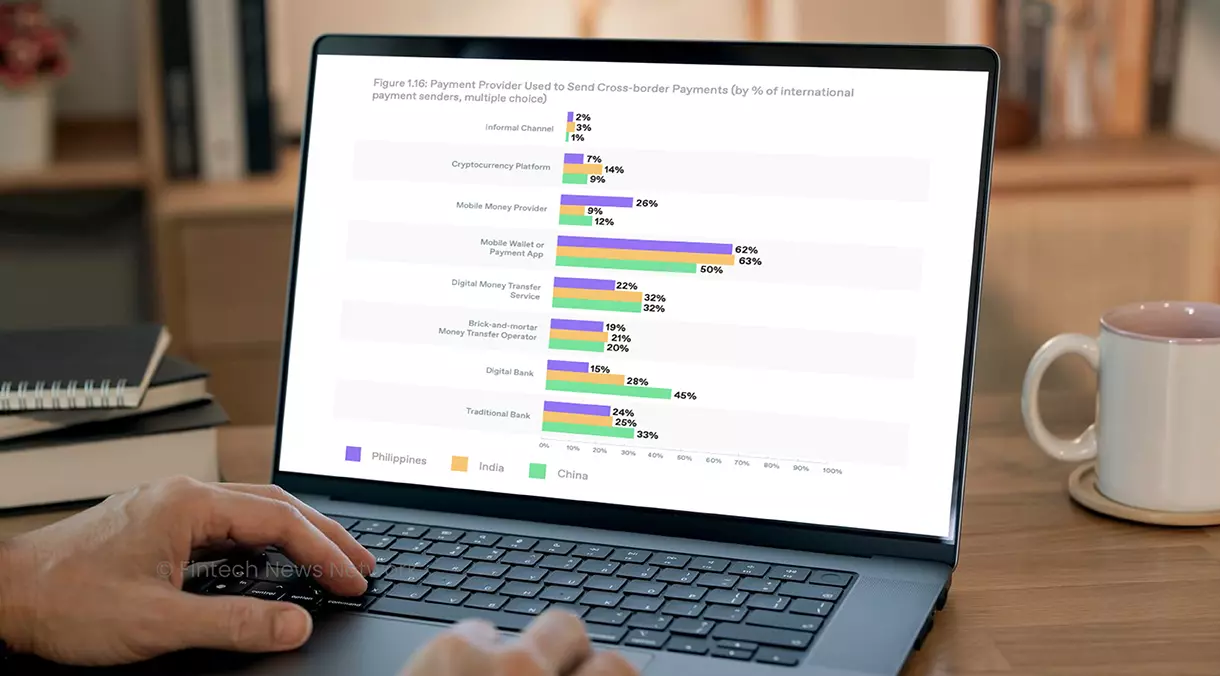
Singapore leads the Asia-Pacific (APAC) region in the 2026 Payments Interoperability Index, driven by Monetary Authority of Singapore (MAS) initiatives; India claims the highest stablecoin use in the region but reports the slowest, costliest cross-border transactions; and mobile wallets now dominate both sending and receiving remittances across all key APAC countries.
These are among the key findings from research by Thunes and Juniper Research, which examined cross-border payments in APAC, exploring the friction points, payment preferences, and regional disparities.
The study draws on a survey of more than 6,700 individuals across ten countries, including China, India and the Philippines, conducted in April 2026. It also presents results from the 2026 Payments Interoperability Index.
This index evaluated 50 countries on the accessibility and ease of making payments across borders, measuring each jurisdiction on economic health, digital infrastructure, financial inclusion, cross-border connectivity, and market dynamics. It then ranks them to form the Payments Interoperability Index.
In APAC, Singapore leads the 2026 Payments Interoperability Index, and ranks second globally with a score of 8.3.
The city-state earned a perfect 10 in the market dynamics and progress, topping both global and regional rankings.
Market dynamics and progress reflect a jurisdiction’s openness to payment innovation by looking at the status of cryptocurrency regulation, open banking mandates, and government-led initiatives in regard to cross-border payments.
Singapore’s high score is attributable to the leading position that the Monetary Authority of Singapore (MAS) has taken in global initiatives such as Project Nexus , as well as providing an example for other countries in the region in regard to bilaterally linking its payment systems to other nations.
Source link





