

Working on the systems behind digital payments and investment services lets you apply technical skills to financial problems, and some of these roles offer attractive pay.
Software engineers in fintech, for example, can earn an estimated S$6,000–S$9,300 a month, according to Singapore’s National Youth Council, which bases its range on public job-portal information updated in 2026.
Preparing for such roles starts with understanding what employers expect and how to develop the relevant skills.
Graduates considering postgraduate study, along with parents helping with that decision, can look at how a programme connects its teaching with work in financial institutions.
NTU Fintech Industry Day 2026 offered students a chance to hear directly from financial services leaders about emerging technologies and the capabilities new entrants would need.
Among those speakers was Fabian Khoshbakht, Head of APAC, Global Payments & Trade at BNY, who delivered the opening keynote.
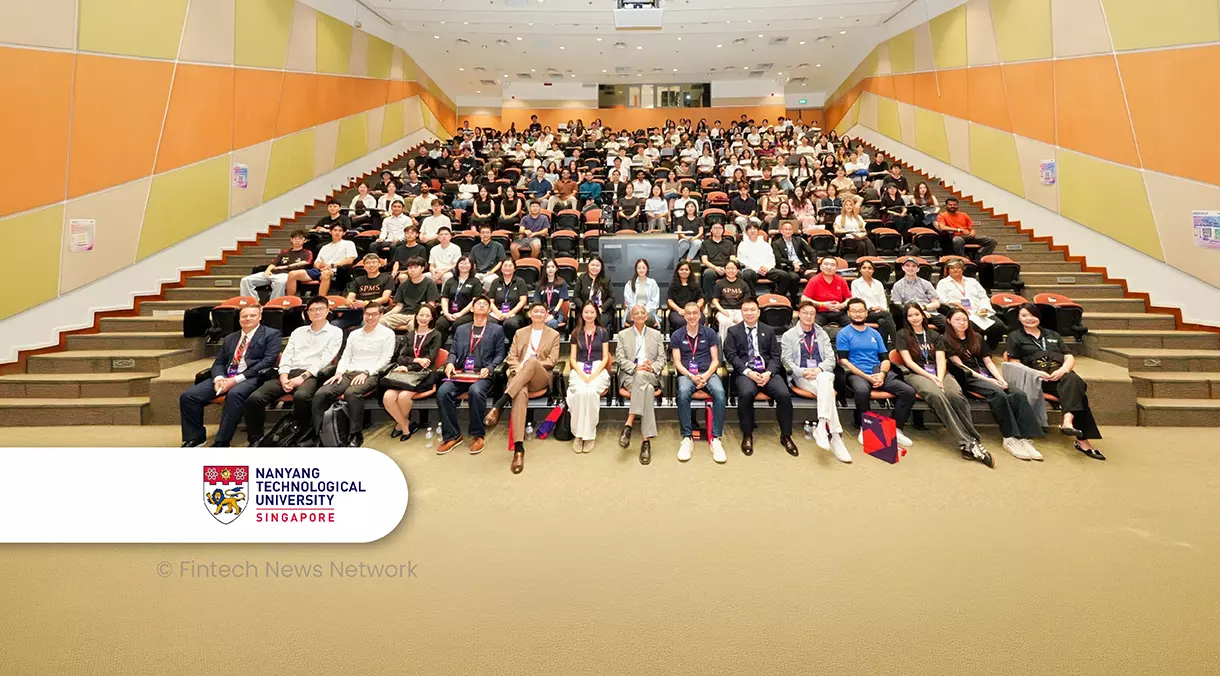
Organised by the School of Physical and Mathematical Sciences (SPMS) at Nanyang Technological University, Singapore, the 8 October 2026 event brought together more than 450 participants and 15 organisations, including BNY, GIC, PwC Singapore and Moomoo Singapore.
Two panel discussions explored developments in financial technology, with the second focusing on AI, Web3 and the future of global financial infrastructure.
GIC’s Industry Spotlight session on AI and risk analytics gave students a closer look at what applying AI could involve in financial work.
Reuben Lim Yan Wee, Vice President, Enterprise Risk & Performance at GIC, emphasised the need to question the assumptions behind a calculation before relying on its result.
Source link





