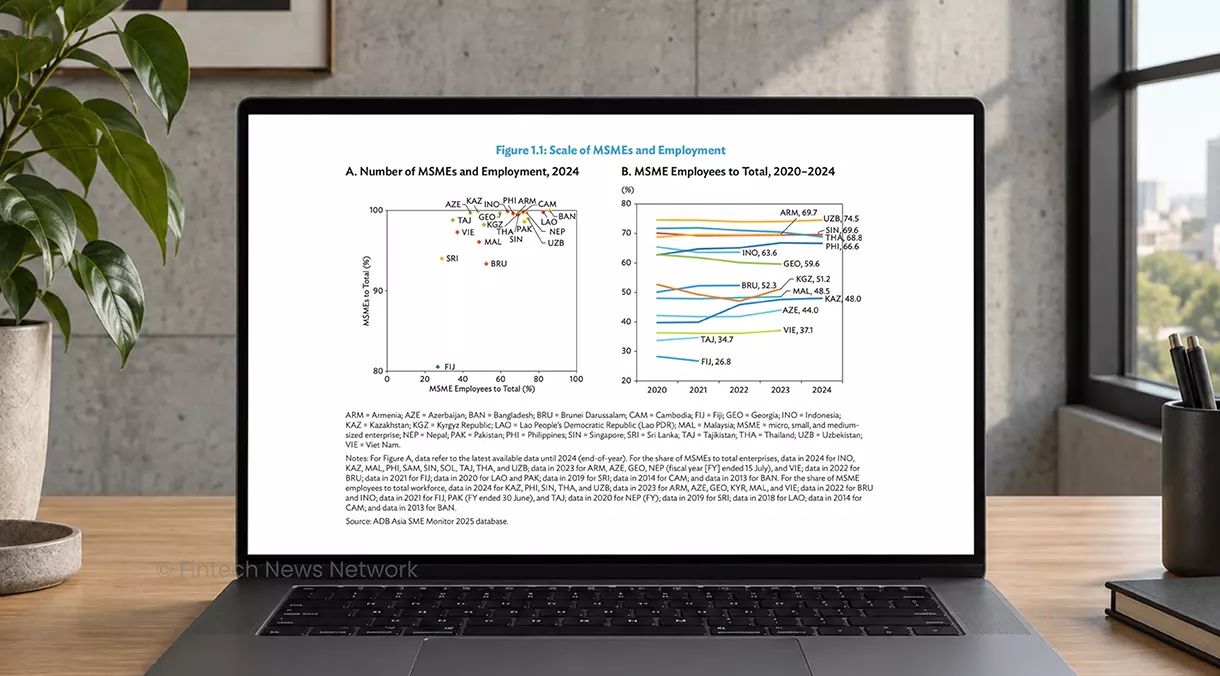
Linking payment systems with digital identity systems among other services and facilities can help Asian economies expand digital trade and narrow the trade finance gap facing small and medium-sized enterprises (SMEs), according to a new paper by the Asian Development Bank Institute (ADBI).
In particular, pairing payment data with commercial, logistics, customs, and financial records, can not only allow SMEs to get paid more efficiently but also allow them to obtain the funding they need to produce, ship, and sell goods internationally.
SMEs bear disproportionate frictions in cross-border trade because many costs associated with payments, compliance, documentation, and credit assessment are fixed at the transaction or customer level. Verifying a new customer, screening a payment, examining trade documents, and conducting due diligence require substantial resources regardless of the size of the transaction, weighing heaviest on smaller firms.
In addition, SMEs often struggle to obtain trade finance as they often lack collateral, have short credit histories, incomplete financial statements, and less established relationships with financial institutions. Consequently, banks often find it difficult to assess their creditworthiness or verify underlying transactions, particularly when parties operate across different legal and regulatory systems.
At the same time, cross-border trade remains heavily fragmented and inefficient. A single transaction generates orders, contracts, invoices, transport documents, insurance records, customs declarations, delivery confirmations, payment instructions, and settlement records, often maintained separately by firms, banks, logistics providers, insurers, and authorities. This fragmentation forces repeated data entry, verification, and reconciliation.
Connecting digital payments to trade finance, verified invoices, digital identity, and logistics data may ease these issues, the report says.
Source link