
Fintech usually thrives on openness. Entrepreneurs need access to international technology. Investors need reliable information. Consumers need affordable internet, while financial companies need the freedom to experiment, compete and connect with markets beyond their borders.
Turkmenistan provides almost the opposite environment. Since gaining independence following the collapse of the Soviet Union in 1991, the country has pursued a considerably more isolated economic model than many of its Central Asian neighbours. That isolation has influenced financial development too. Banking remains heavily state dominated, foreign-currency access is restricted and the private technology ecosystem is comparatively small.
Yet Turkmenistan is becoming more digital. Today, a new national digital-economy programme is taking effect, banks are being technologically modernised and legislation regulating cryptocurrency mining and exchanges has entered into force.
Turkmenistan is therefore embracing selected parts of fintech without embracing the open digital economy from which fintech normally emerges. That contradiction makes it one of Central Asia’s most unusual financial technology markets.
Understanding Turkmenistan’s fintech landscape requires beginning underground rather than online. The country possesses some of the world’s largest natural gas reserves, with hydrocarbons dominating exports and providing an important source of government revenue. China remains the principal destination for Turkmen gas.
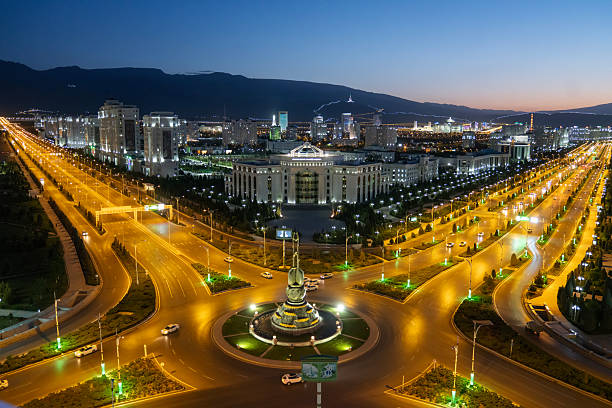
Ashgabat is the country’s political, commercial and financial centre, while the banking system includes institutions such as the State Bank for Foreign Economic Affairs, State Commercial Bank of Turkmenistan and other specialised state banks.
6 per cent and nominal GDP per capita of roughly $12,300. These figures should nevertheless be treated cautiously given Turkmenistan’s unusual exchange-rate system and limited availability of independent economic data .
Source link