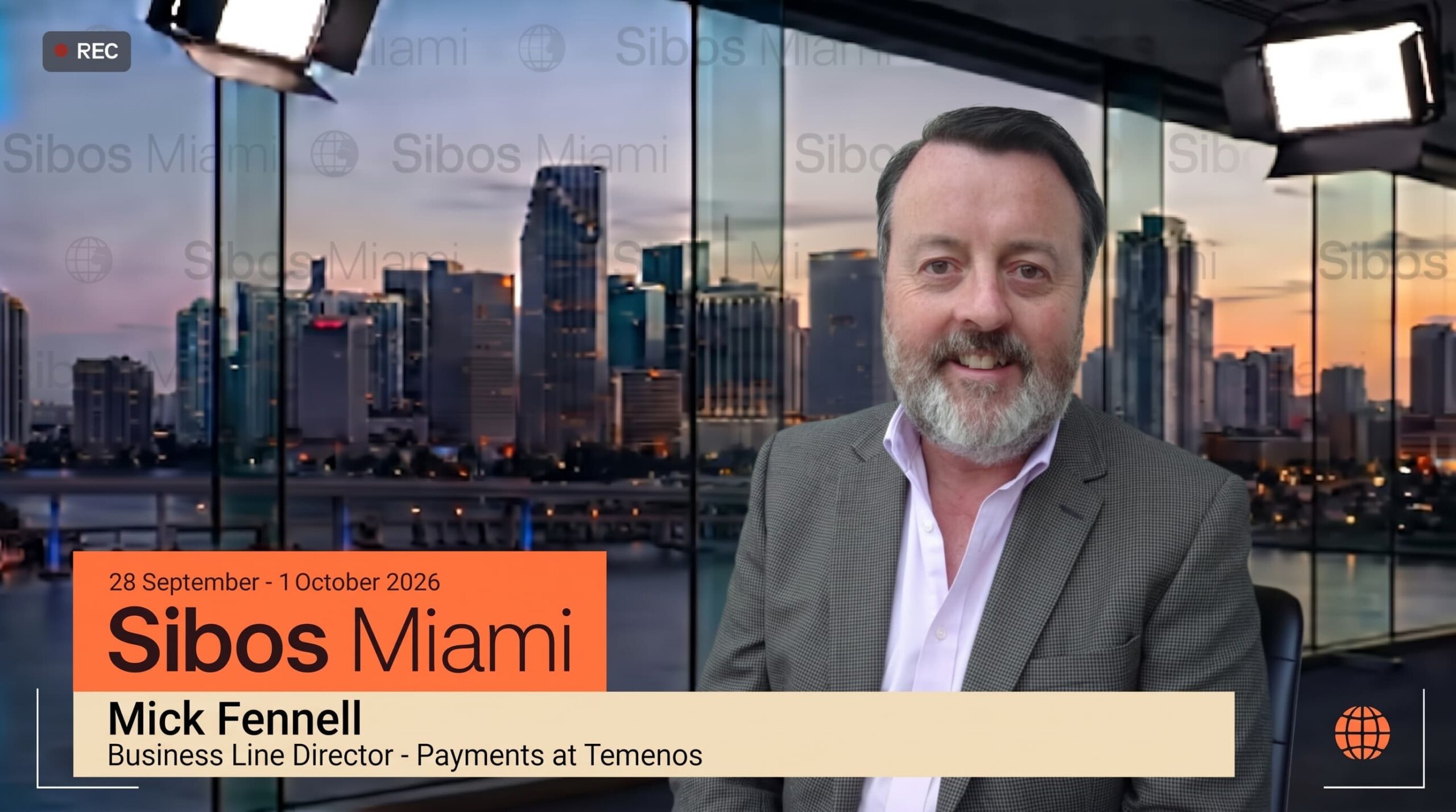
Mark Walker of The Fintech Times speaks with Mick Fennell , Business Line Director for Payments for Temenos , at Sibos in Miami about where agentic commerce actually stands today, what breaks first in machine-to-machine payments, and how banks should think about tokenized deposits, stablecoins, CBDCs, and crypto. The conversation focuses on the practical side of modernizing payments infrastructure, with a clear emphasis on trust, liquidity, regulation, and customer experience.In this episode, Mick explains why the real shift is less about flashy new technology and more about how banks adapt existing rails for faster, smarter, programmable money.
Mick defines agentic commerce as machine-to-machine decisioning and payment processing, with AI agents already used across parts of the payment flow today.
The strongest near-term use cases are on the corporate and business side, where POCs and pilots are already underway.
The first things that break are infrastructure limits: speed, performance, capacity, and legacy systems that cannot support event-driven, API-first processing.
Fraud controls and service-level rules become critical when payments happen at machine speed, especially around amount thresholds, product permissions, and monitoring.
Mick argues that current banking controls are not obsolete, but they do need to be enhanced for higher volume and faster execution.
He breaks digital money into four categories: CBDCs, stablecoins, tokenized deposits, and cryptocurrency, each with a very different risk and trust profile.
Tokenized deposits are presented as the most bank-native option because they keep money within existing regulatory rails and are easiest for banks to support.
Stablecoins are most useful today for large corporates and multinationals, but liquidity, rail-on and rail-off infrastructure, and currency fragmentation remain major constraints.
Source link