

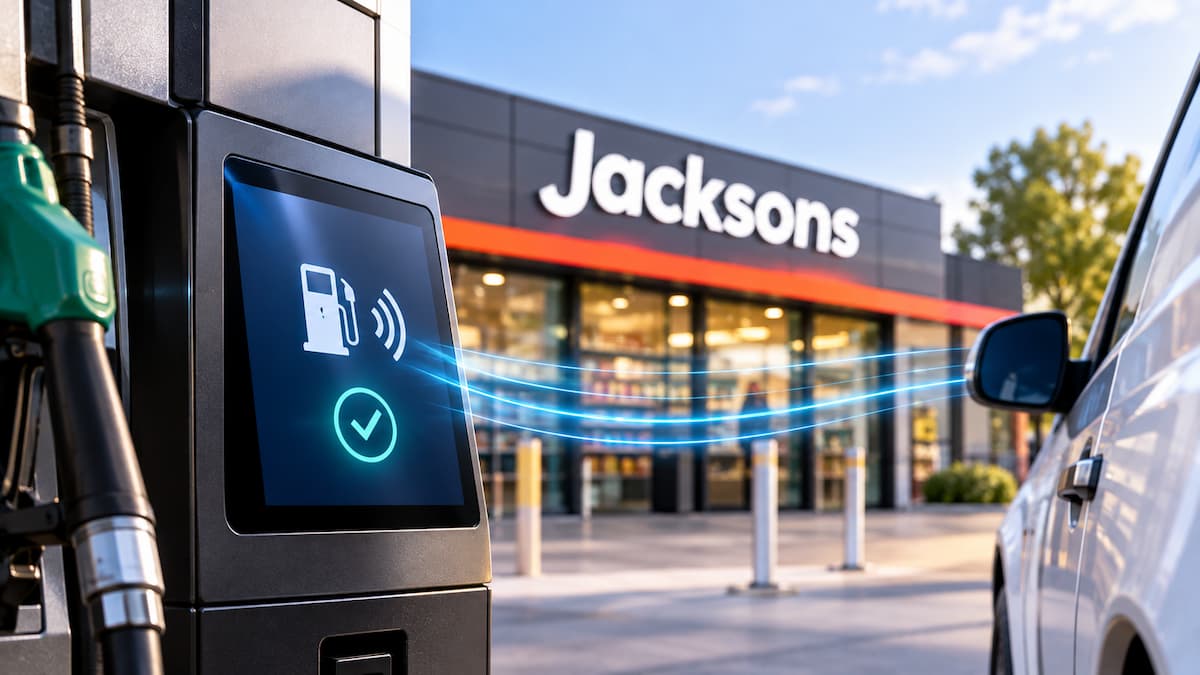
The partnership gives fleet operators on Piston’s network additional fuelling options when planning routes in the western US, while Jacksons gains a channel to attract commercial fuel volume without adding a new card scheme or open-loop network. Piston replaces the physical fleet card with mobile authorisation tied to a specific driver and vehicle, giving fleet managers real-time spend visibility at the transaction level.
Piston’s commercial proposition rests on a direct integration at the point of sale rather than routing through the traditional card-network stack. The company says this removes four intermediaries from the standard transaction chain, improving the economics for both the fuel retailer and the fleet. Direct POS integration also gives Piston access to richer transaction data than an open-loop card network would see, which the company says underpins its fraud-prevention tooling.
That fraud layer now includes Piston Guard, a real-time tool that can flag or block suspected fraudulent purchases before settlement, and Piston Analytics Agent, which surfaces spending patterns for fleet operators. Both are positioned as AI-assisted capabilities, though the release did not provide performance benchmarks or third-party validation for either product.
Cory Jackson, president of Jacksons Food Stores, said that commercial fuelling is a meaningful part of the chain’s business and that the way fleets pay is shifting. “Working with Piston helps us keep pace with that shift and makes Jacksons a practical stop for fleets using modern payment technology,” he said.
The US fleet card market is a well-established segment dominated by WEX , Fleetcor and Comdata , all of which operate large closed-loop or open-loop networks with deep integrations into fuel retailers and telematics providers.
Source link