

Finance still matters, of course, even as the work surrounding it has changed.
Banks and fintech companies increasingly run more of their operations through software, with data and AI shaping how many of those systems work.
A lending model, for example, is only useful if the people building or using it understand the credit decision behind it, and similar dependencies appear in other parts of financial services.
Digital payments rely heavily on security expertise, while quantitative teams use modelling to test how financial systems could respond under different conditions.
Specialists increasingly need enough knowledge of adjacent fields to work with the teams around them.
Nanyang Technological University‘s School of Physical and Mathematical Sciences (SPMS) is responding to that shift through several postgraduate programmes, led by its Master of Science in Financial Technology (MSFT).
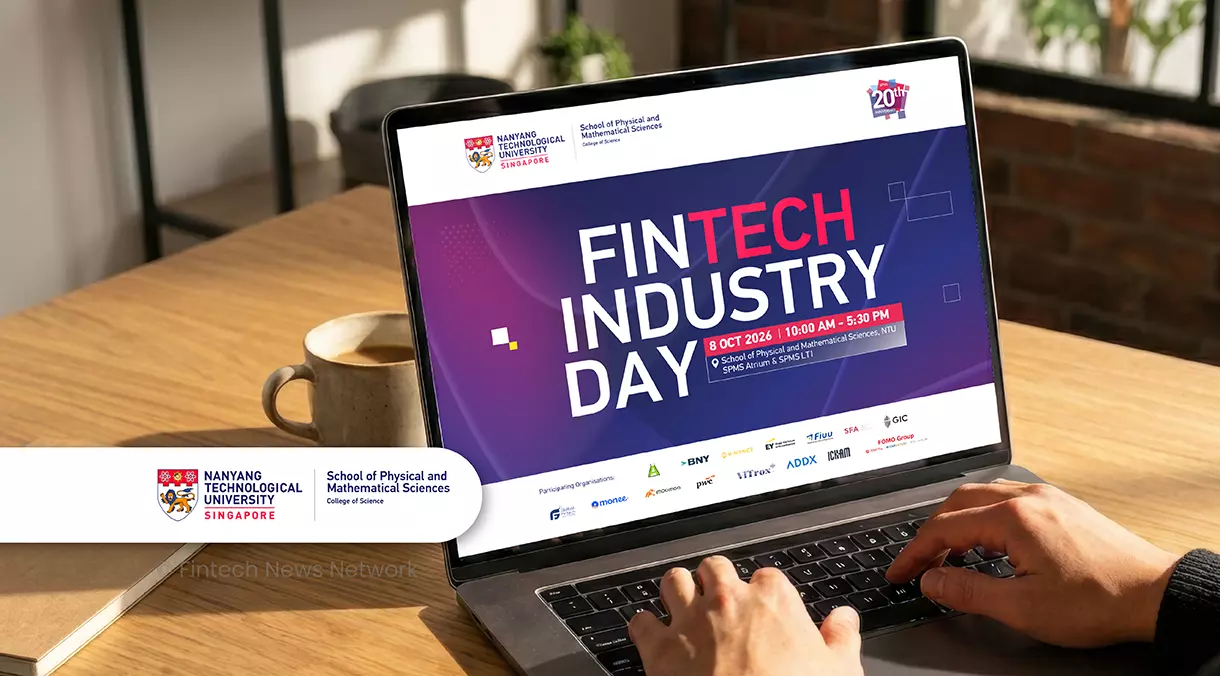
Those changing skill requirements will also feature at NTU FinTech Industry Day 2026 on 8 October, where executives and academics will discuss how AI and other technologies are changing financial services.
NTU’s Master of Science in Financial Technology places finance alongside the technical capabilities increasingly used to build and operate digital financial services.
Students choose between two specialisations, Intelligent Process Automation (IPA) and Digital Financial Services (DFS).
IPA takes the more technical route, with a curriculum covering areas such as machine learning and automation for financial applications.
DFS looks more closely at how technology is applied within financial services, including how digital financial products operate in practice.
The two tracks reflect the breadth of work now grouped under Fintech, since someone building a financial product may need a very different skill set from the person responsible for implementing or managing it.
Source link





