

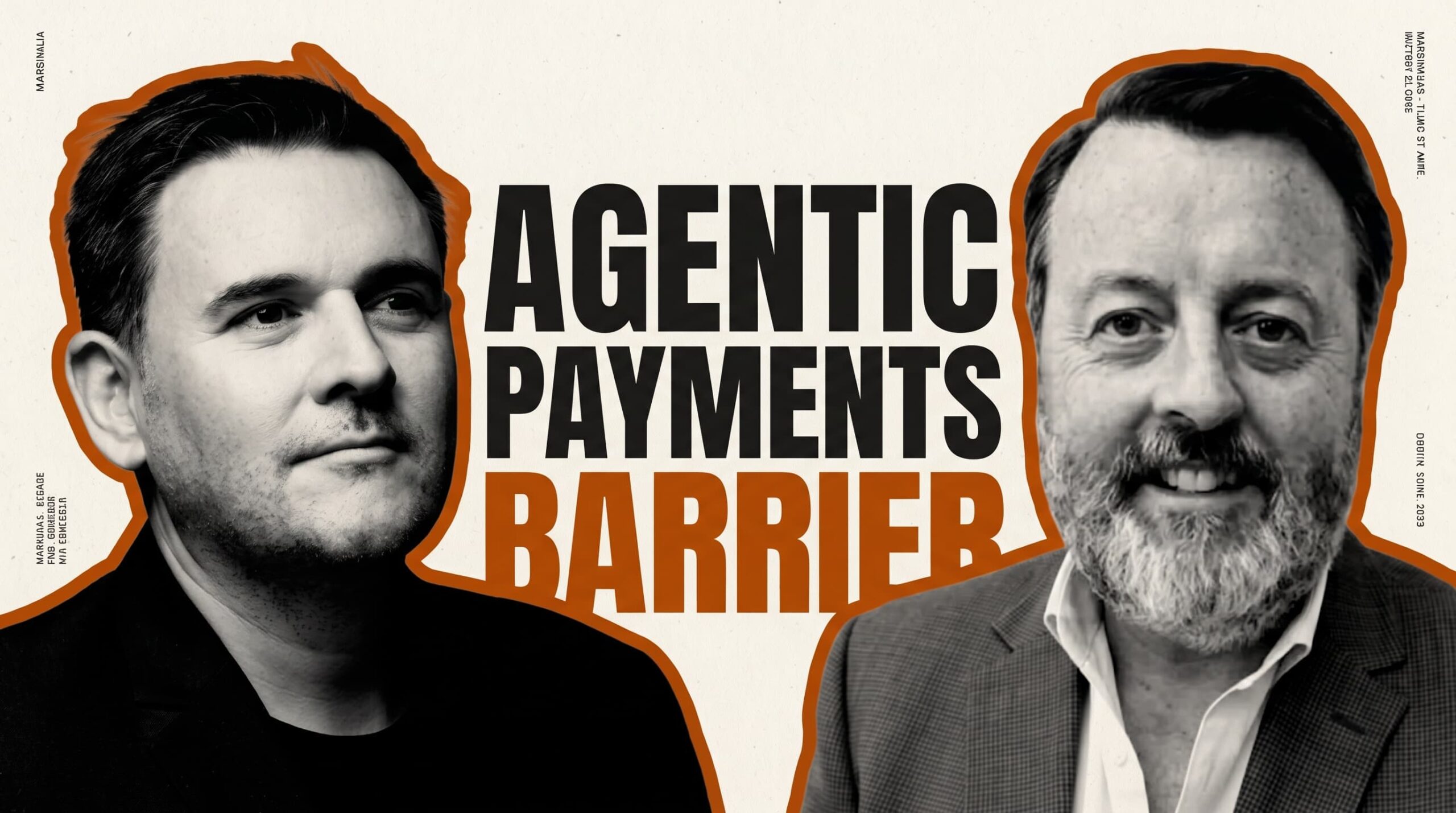
That was the core message from Mick Fennell, Business Line Director for Payments at Temenos, in a conversation with Mark Walker at Sibos in Miami. His view is clear: the technology is advancing, but the winners will be the institutions that modernize their infrastructure, manage risk well, and keep the customer experience simple.
In this post, you’ll learn what agentic payments actually are, what breaks first when banks try to implement them, how to think about the different types of digital money, and why the future of banking will likely be a mix of traditional and tokenized finance.
The phrase agentic payments can sound futuristic, but the idea is straightforward: machines making decisions and moving value on behalf of people or businesses. Mick’s point was that AI agents are already being used across the payment process today. The real shift comes when those agents start interacting machine-to-machine, taking on more of the decision-making involved in what gets paid, when, and under what rules. For now, this is more advanced in business and corporate use cases than in consumer ones. That makes sense. Corporates often have more structured payment rules, more complex workflows, and a stronger need for automation across multiple systems. But there’s an important catch: agentic commerce does not work in isolation. It depends on the plumbing underneath it. That means banks need infrastructure that can handle:
If a bank is still heavily tied to legacy systems, the friction shows up quickly. The idea may be new, but the requirements are familiar: speed, reliability, and trust.
Source link





